Reviewed · TOURS
Ephesus: Half-Day Tour from Kusadasi
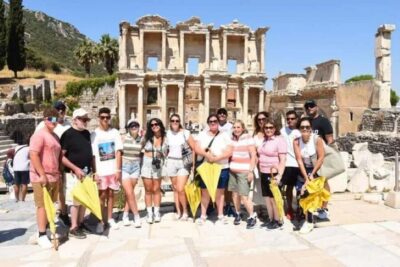
Ephesus gives you the rare feeling of walking through a real ancient city, not just looking at scattered ruins. You follow 2,000-year-old marble streets past the Library of Celsus, the Great Theatre, and the small carvings that reveal how ordinary Roman life worked.
I like the compact half-day format and the guaranteed return to the port for cruise passengers. I also like that the group is limited to 10 people, with entry fees, pickup, transport, and a live guide covered in the price. The main caution is that one experience included several shopping stops, so confirm the plan if you want every minute focused on Ephesus.
In This Review
- Key points to know before you go
- Why Ephesus works so well as a half-day tour
- Pickup from Kusadasi or Izmir
- Walking the marble streets of Ephesus
- The Library of Celsus and its famous facade
- The Great Theatre and the voice of St. Paul
- The Temple of Hadrian and small details worth finding
- Finding Ephesus’s ancient advertisement
- Guides and language choices
- The shopping-stop question
- Is $135 a fair price?
- Who should book this experience?
- Final decision: a smart short visit with one important question
- FAQ
- How long does the Ephesus tour last?
- Where can pickup and drop-off take place?
- What is included in the $135 price?
- Which languages are available?
- Is the tour suitable for wheelchair users?
- What should I bring to Ephesus?
Key points to know before you go
- The Library of Celsus is the visual star: Its restored two-story facade is the monument most people picture when they think of Ephesus.
- The Great Theatre is enormous: The stone auditorium held about 24,000 people and is one of the tour’s most powerful stops.
- The marble street has a cheeky secret: A footprint, heart, and woman’s head point toward the ancient brothel in what is often called the world’s first advertisement.
- Small groups keep the visit manageable: The tour is limited to 10 participants, useful in a busy archaeological site.
- Several guides receive strong praise: Fortunato and Tamer are noted for fluent Italian, while Serpil is described as clear, patient, and friendly.
- Shopping may affect the timing: An experience with guide Sumera included three shops, including a leather store, so ask about this before departure.
Why Ephesus works so well as a half-day tour
Ephesus is one of the Aegean Coast’s essential sights, but it can feel confusing without context. The ruins spread across a broad open-air site, and the most impressive buildings are not arranged like rooms in a museum. A guide helps you understand what you are looking at and keeps the visit moving.
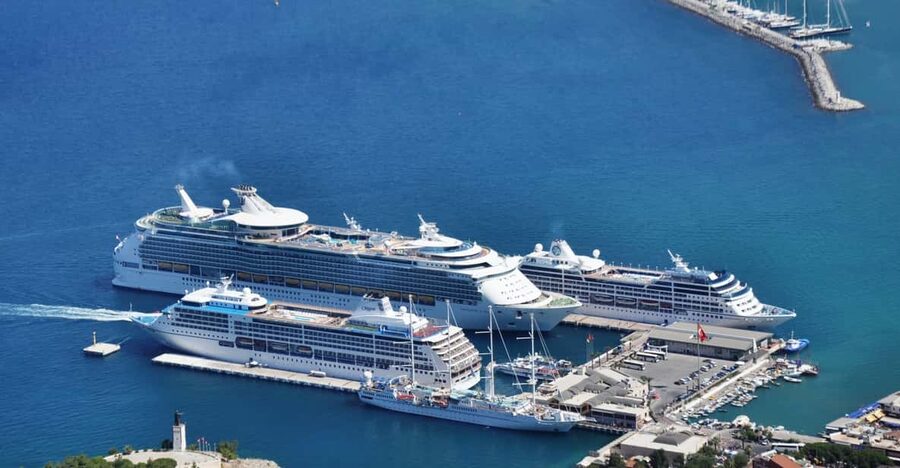
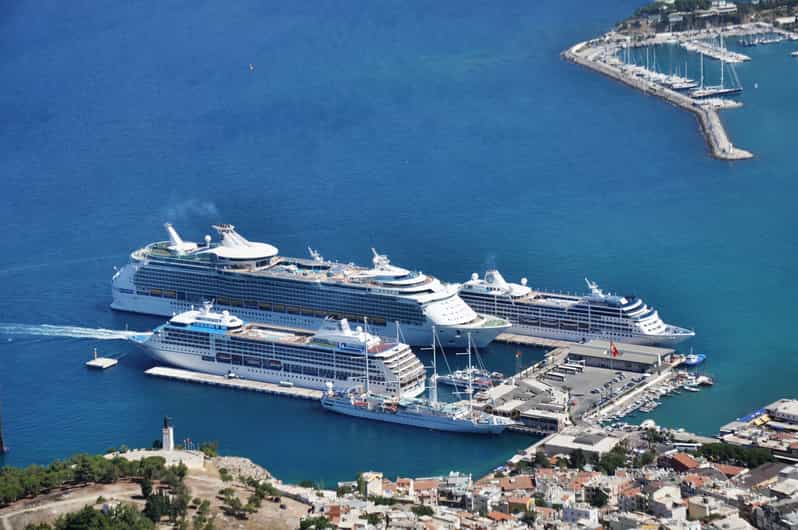
This tour lasts about 3.5 to 4.5 hours, including transportation from Kusadasi or Izmir. That makes it a practical choice if you are visiting from a cruise ship, have only one morning free, or want to see Ephesus without giving up a full day.
The price is $135 per person. That is not the cheapest way to reach the ruins, but the amount includes a licensed guide, private or small-group vehicle service, site entrance fees, and pickup and drop-off. For a short visit, those inclusions can make the cost reasonable, especially if you value a reliable schedule and do not want to arrange transport yourself.
The experience is best understood as a focused introduction rather than a slow archaeological study. You will see the major monuments and hear the stories that make them memorable, but you will not have unlimited time for every corner of the site.
A few more Kusadasi tours worth comparing
- Ephesus and Sirince Half-Day Private Tour with Lunch
★ 5.0 · 18 reviews - All Inclusive Private Half-Day Ephesus and Sirince Village Tour with Lunch
★ 5.0 · 12 reviews - Half-Day Guided Bike Tour in Kusadasi.
★ 5.0 · 4 reviews
Pickup from Kusadasi or Izmir
Pickup is available from your hotel, the port, or the airport in Kusadasi or Izmir. You need to indicate your preferred location when booking, which matters if you are arriving by cruise ship and have a strict departure time.
Transport is provided in an air-conditioned vehicle with a professional driver. One account specifically describes a clean, comfortable Mercedes V-Class, while another mentions a Mercedes Vito. Vehicle type may vary, but the supplied details point to comfortable transport rather than a basic shared bus.
That comfort matters in western Turkey, especially during the warmer months. Ephesus has little shade across much of the walking route, so returning to an air-conditioned vehicle is welcome. Wear comfortable shoes, bring sunglasses, a hat, and sunscreen. The site is made for walking, and uneven ancient paving can be tiring.
The group limit of 10 is another practical advantage. A small group usually makes it easier to hear the guide, ask questions, and keep the visit moving through narrow or crowded areas. It also gives the experience a more personal feel than a large coach excursion.
Walking the marble streets of Ephesus
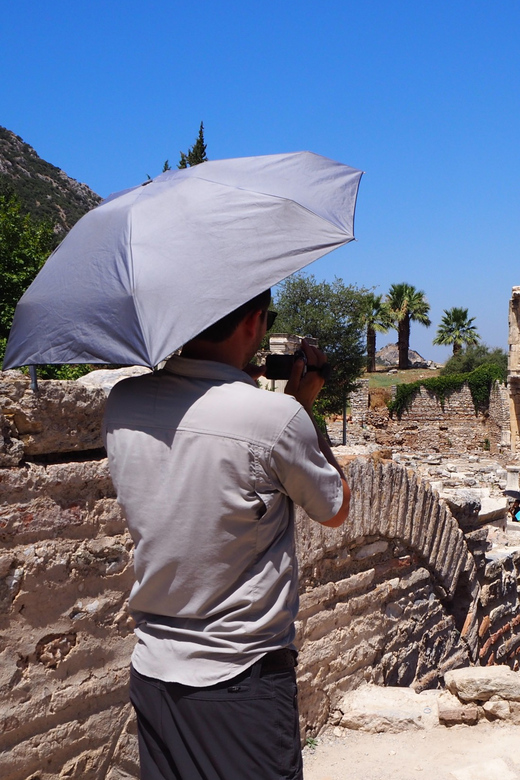
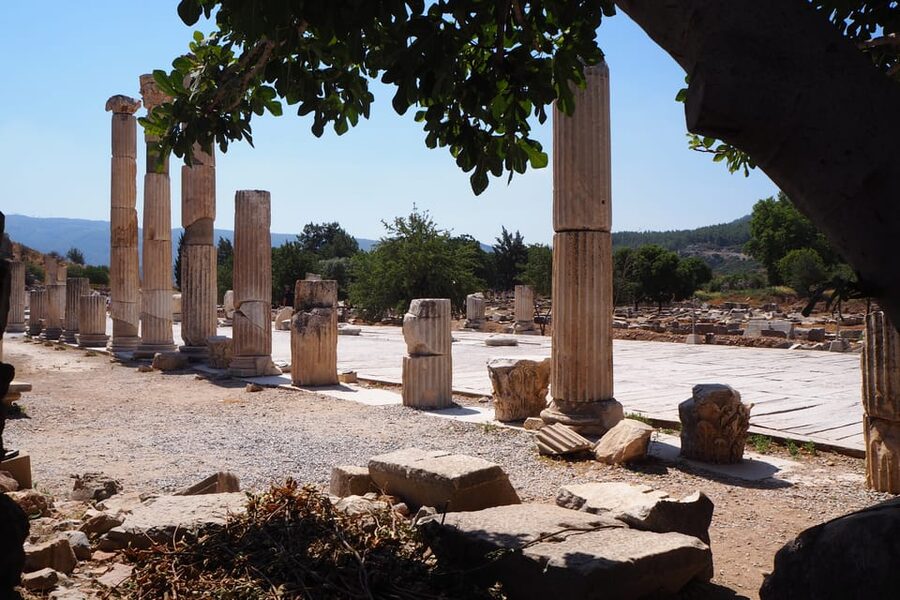
The heart of the visit is the walk through ancient Ephesus. You follow marble-paved streets once used by residents, merchants, officials, and religious pilgrims. The stones are worn and uneven in places, so good footwear is more important than stylish footwear.
The tour places the city in the age of Cleopatra, Mark Antony, the Roman emperors, and the early Christian apostles. That broad setting helps you see Ephesus as a living city, not only as a collection of old walls.
Your guide points out details that are easy to miss. One example is the ancient public toilet area near the Scholastica Baths. It is a small but useful reminder that Ephesus had the same practical needs as any large city. These details often make the visit more enjoyable than a long list of dates and rulers.
The site is open to the sun, and the walking route may feel demanding for anyone with limited mobility. The tour is not suitable for wheelchair users or people with mobility impairments. If you tire easily, ask about the exact walking plan before booking.
The Library of Celsus and its famous facade
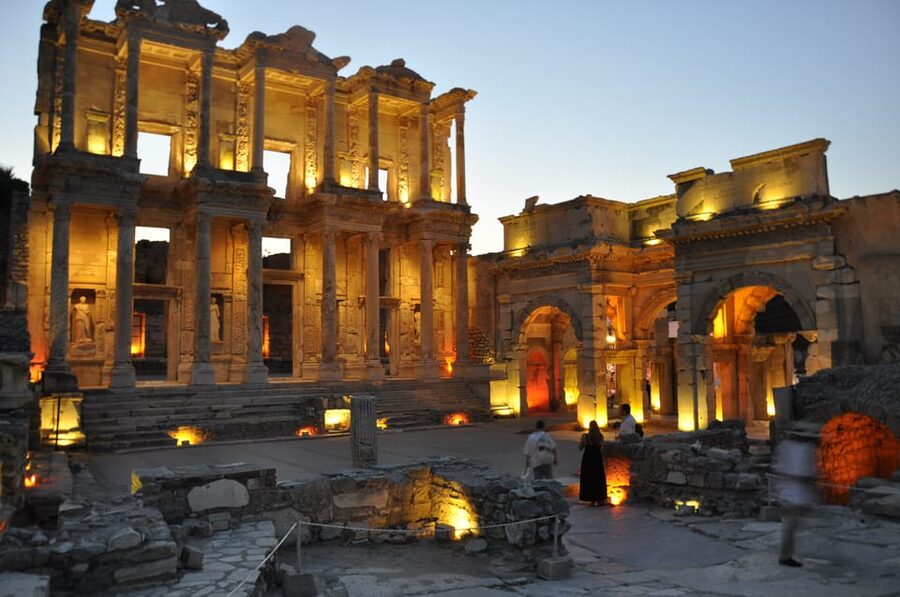
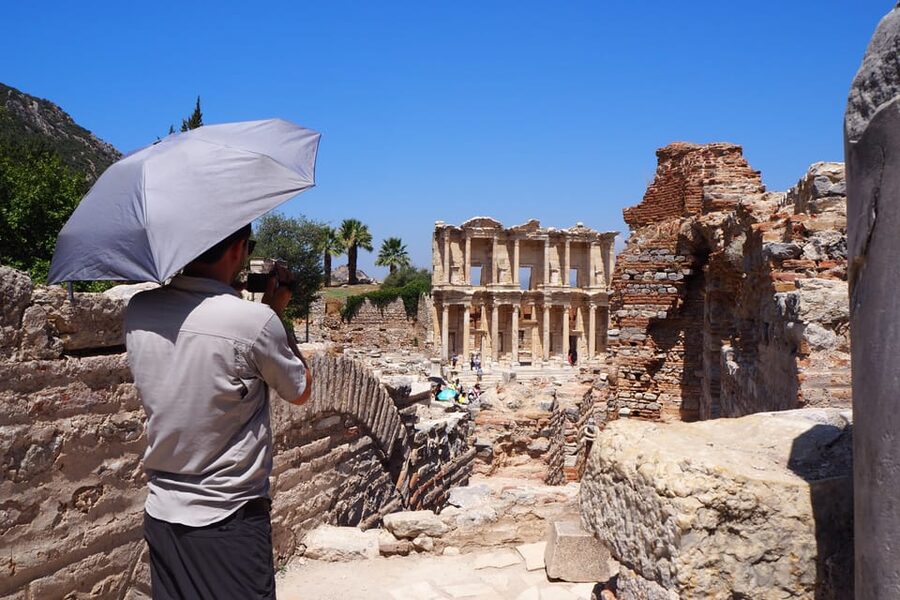
The Library of Celsus is the most recognizable structure in Ephesus. Its restored facade rises in two levels, with columns, statues, and carefully arranged architectural details that make it easy to understand why this stop is the visual centerpiece.
The building was more than a library. It also served as the tomb of a Roman senator, which gives the monument a more personal purpose than its name suggests. Your guide can help you separate the original Roman structure from the modern conservation work, though the tour is designed for clear highlights rather than technical archaeology.
Take time to look closely at the facade instead of only taking a quick photograph. The proportions, columns, and carved decoration show the public image that Roman cities wanted to project. This is one of the places where a guide’s explanation adds real value, since the ruins alone do not tell you who Celsus was or why the building mattered.
The front area can be one of the busiest parts of the route. Staying near your guide is useful, particularly if several groups arrive at the same time.
A different sort of day out of Kusadasi:
- FOR CRUISERS: Skip The Lines PRIVATE EPHESUS TOUR &On Time Return
★ 5.0 · 8,527 reviews - Top Choice For Cruisers: Ephesus, Mary’s House WITH TICKETS+LUNCH
★ 5.0 · 7,233 reviews - PRIVATE EPHESUS TOUR FOR CRUISERS: On-time Return and Skip-Line
★ 5.0 · 5,807 reviews - PRIVATE NO HIDDEN FEES Ephesus, Mary’s House Guided Tour /GRP OPT
★ 5.0 · 2,455 reviews
The Great Theatre and the voice of St. Paul
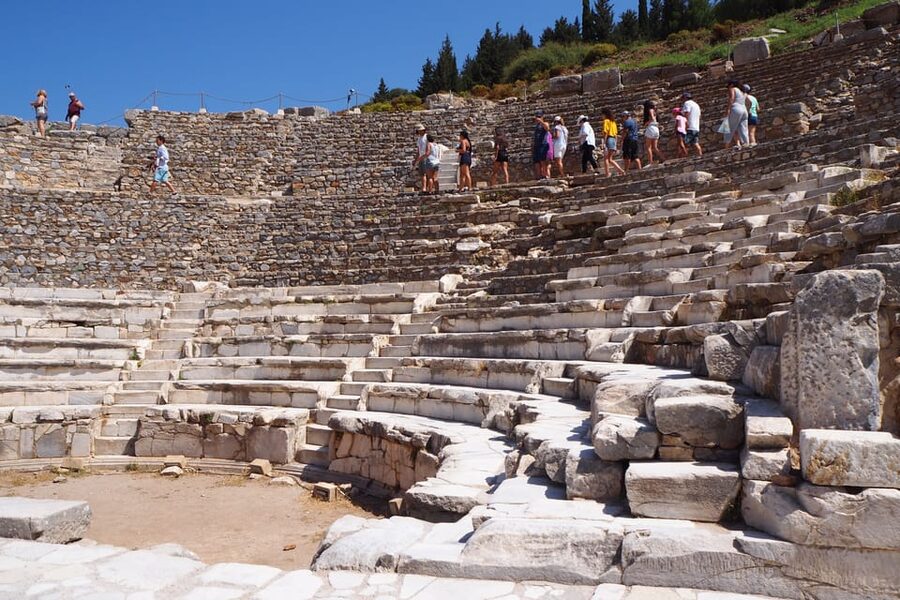
The Great Theatre is a striking change of scale. Its stone seating rises in a huge semicircle and once held about 24,000 people. From the lower area, you can look upward and get a sense of the crowd that would have filled the seats.
The theatre hosted public performances and spectacles, including gladiatorial events. It is also associated with St. Paul, who is said to have preached to the Ephesians there. That connection links the monument to the city’s Roman public life and its early Christian story.
This stop rewards a little imagination. Try to picture the noise, movement, and political importance of a public gathering in a building this large. The theatre is not simply a photo stop. It shows the size and confidence of Ephesus at its height.
The route through the theatre and surrounding streets is exposed and involves walking over stone surfaces. Bring water, though the supplied information does not specify whether refreshments are provided. Short pauses may help, particularly in hot weather.
The Temple of Hadrian and small details worth finding
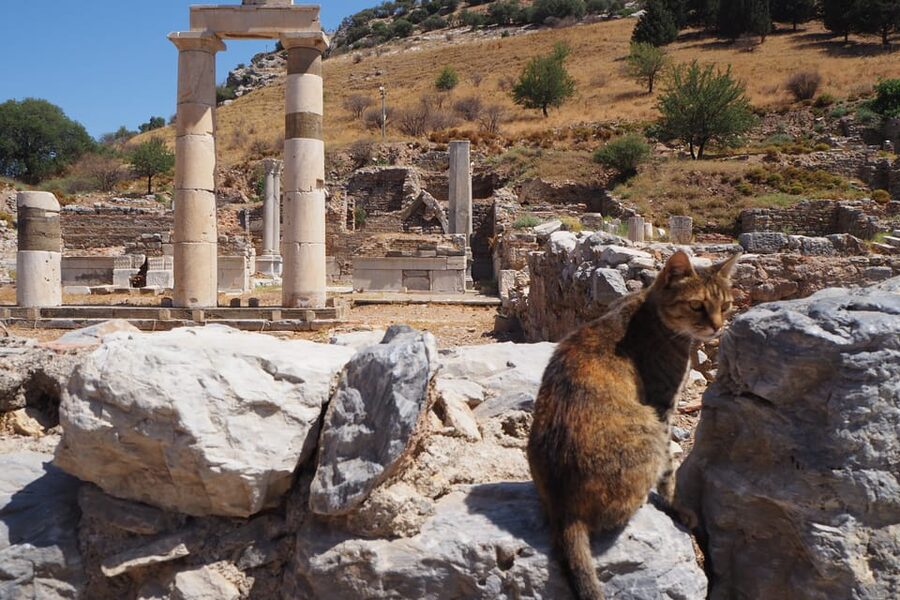
The Temple of Hadrian is smaller than the Library of Celsus or the Great Theatre, but its decorative details are among the most interesting parts of the visit. Look for the carved head of Medusa, an image used in ancient architecture to ward off evil.
This is the kind of stop that justifies having a guide. If you walk alone, you might pass the carving without understanding its purpose. A good guide can point out the detail, explain what you are seeing, and connect it to the beliefs of the people who built the city.
The ancient public toilets at the Scholastica Baths offer a different kind of insight. They are not grand, but they help you picture the shared facilities and social habits of an urban Roman community. I appreciate stops like this because they move the tour beyond emperors and temples.
The advertised visit also includes the remains associated with the Temple of Artemis. You should keep your expectations measured here. The Temple of Artemis was one of the ancient world’s great religious monuments, but only limited remains are visible today. The Library and theatre provide the stronger visual impact.
Finding Ephesus’s ancient advertisement
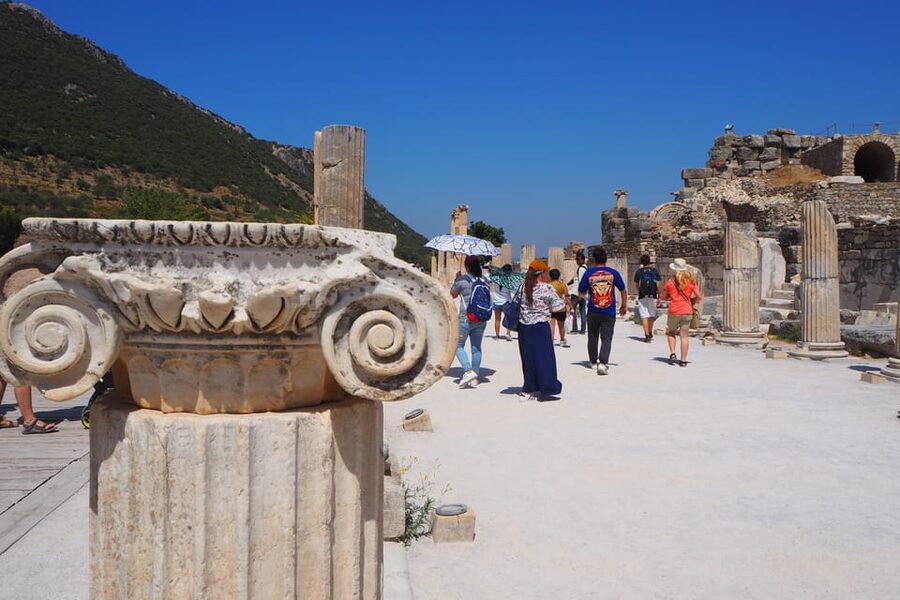
One of the most entertaining details is carved into the marble street. A footprint, a heart, and a woman’s head point toward the ancient brothel. The marking is often described as the world’s oldest advertisement.
It is a small detail, but it gives the city a human touch. Ephesus was not only a place of worship and government. It was also a busy city with businesses, entertainment, and public signs competing for attention.
Ask your guide to show you the carving clearly, since it can be easy to miss among the paving stones. This is a good moment to slow down and look at the ground instead of only photographing the large monuments.
The detail also shows why a short guided visit can work well. You may remember the footprint and heart long after the formal names of Roman officials have faded.
Guides and language choices
The tour offers live guiding in English, German, French, Dutch, Italian, Spanish, Japanese, Russian, Portuguese, Turkish, and Greek. The available language depends on the departure you choose, so confirm it before paying.
Several specific guides have received especially positive feedback. Fortunato is praised for clear, fluent Italian and engaging explanations. Tamer is also described as highly prepared and strong in Italian. Serpil is noted for being clear, friendly, patient, and well informed.
Language quality can vary by guide, and one Italian-language departure received criticism for weak communication. If you are booking in a language other than English, ask for confirmation that the guide will conduct the tour fluently in your chosen language.
The guide’s role matters here. Ephesus is visually impressive on its own, but the best parts of the experience are often the small explanations: why Celsus’s tomb is inside the library, what the Medusa carving meant, and how the street advertisement worked.
The shopping-stop question
The supplied description focuses on the archaeological site and does not list shopping as part of the included experience. Still, one account describes a half-day outing with three shopping stops, ending at a leather shop called Populer Leather.
That is important if you have a cruise departure or a firm return schedule. Shopping can take time, and it may change the balance of the tour from ancient ruins to commercial visits.
I would ask these questions before you go:
- Are shopping stops included or optional?
- How much time is reserved for Ephesus itself?
- Can you decline the stops without affecting the return transfer?
- Is the price fixed, or could you be encouraged to buy products?
If you do enter a shop, take your time with purchases. Inspect stitching, labels, zippers, and care instructions before paying. Keep the receipt and ask about the return policy in writing. You are not required to buy anything simply because a stop is offered.
This caution does not erase the tour’s strong points, but it is the clearest issue to settle in advance. If your priority is maximum time among the ruins, get a firm answer before departure.
Is $135 a fair price?
At $135, you are paying for convenience as much as for sightseeing. The price covers entrance fees, a licensed guide, an air-conditioned vehicle, a professional driver, and pickup and drop-off. You also avoid the work of finding transport between the port, hotel, and archaeological site.
For a cruise passenger, reliable timing may be worth a great deal. The tour specifically promises an on-time return to the ship, which reduces the stress of arranging an independent visit. A missed ship is an expensive problem, and a guided transfer offers some protection against that risk.
The value is weaker if you are already staying near Ephesus, have your own transport, or prefer to spend several hours studying the ruins at your own pace. In that case, the tour’s short format and fixed route may feel restrictive.
I see it as a practical middle choice: more personal than a large coach excursion, easier than arranging everything yourself, and more focused than a full-day regional tour.
Who should book this experience?
I would recommend it to cruise passengers, first-time visitors, couples, families with limited time, and anyone who wants the main monuments explained in plain language. The small group and comfortable vehicle are especially useful if you dislike large organized excursions.
It also suits people who want a simple plan. Pickup, entry, transport, and guiding are handled for you, while the 3.5 to 4.5-hour duration leaves time for other plans in Kusadasi or Izmir.
I would hesitate if you use a wheelchair, have serious walking limitations, or want a completely independent archaeological visit. I would also hesitate until confirming the shopping policy if you are strict about spending the entire half-day at Ephesus.
Free cancellation is available up to 24 hours in advance, and you can reserve now and pay later. Those terms give you some flexibility if your port schedule changes.
Final decision: a smart short visit with one important question
Book this Ephesus half-day tour if you want the major sights, a guide who can explain the overlooked details, and a reliable transfer back to Kusadasi or your ship. The Library of Celsus, Great Theatre, Temple of Hadrian, public toilets, and ancient advertisement make a strong short program.
Before booking, confirm your guide’s language and ask directly about shopping stops. If the answers suit you, $135 is a fair price for the time saved and the transport security. If you want long, quiet hours among the ruins, arrange a longer private visit instead.
FAQ
How long does the Ephesus tour last?
The tour lasts approximately 3.5 to 4.5 hours. Starting times vary, so check availability for the date you want.
Where can pickup and drop-off take place?
Pickup is available from your hotel, the port, or the airport in Kusadasi or Izmir. You should indicate your preferred pickup location when booking.
What is included in the $135 price?
The price includes a licensed professional guide, an air-conditioned vehicle with a professional driver, pickup and drop-off, and entrance fees for the museums and sites included in the tour.
Which languages are available?
Guiding is available in Spanish, English, Italian, Dutch, Japanese, Russian, Portuguese, Turkish, Greek, and German. French is also listed among the available guide languages in the inclusions.
Is the tour suitable for wheelchair users?
No. The tour is not suitable for wheelchair users or people with mobility impairments. The visit involves walking on ancient marble streets and other uneven surfaces.
What should I bring to Ephesus?
Bring your passport or ID card, comfortable walking shoes, sunglasses, a sun hat, sunscreen, and a camera. Large bags and luggage are not allowed, and video recording is not permitted.
Just added around Kusadasi
- Kusadasi: Private Ephesus Day Trip with Pickup and Drop-off★ 5.0 · 3 reviews
- Kusadasi: Quad Safari★ 4.3 · 3 reviews
- Shore Excursion: Private Pamukkale Tour From Kusadasi Port★ 5.0 · 3 reviews
- Ephesus Shore Excursions For Cruisers★ 5.0 · 3 reviews
- Ephesus and House of Virgin Mary From Kusadasi or Selcuk★ 4.0 · 3 reviews
- Best Of Private Ephesus Tour From kusadasi Cruise Port★ 5.0 · 3 reviews
- Ephesus & Mary’s House & Artemission Tour for Cruisers★ 5.0 · 3 reviews
- The Best of Ephesus Tour For Cruisers★ 4.0 · 3 reviews
Tours, compared.
FOR CRUISERS: Skip The Lines PRIVATE EPHESUS TOUR &On Time Return
Read our review →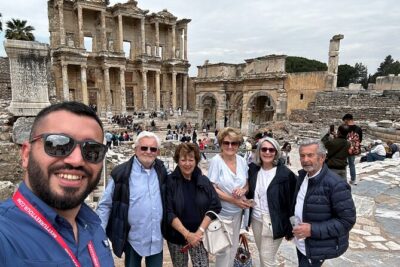
PRIVATE EPHESUS TOUR FOR CRUISERS: On-time Return and Skip-Line
Read our review →
For Ship Guests:BEST SELLER EPHESUS PRIVATE TOUR & On Time Return
Read our review →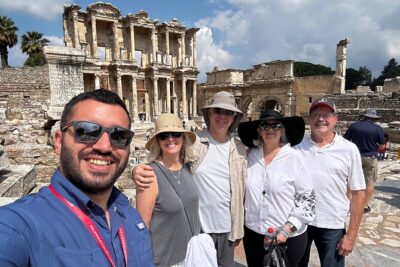
ALL INCLUDED: Ephesus Ruins, Mary’s House Tour incl ENTRY TICKETS
Read our review →
Ephesus Temple of Artemis and House of Mary Private Half Day Tour
Read our review →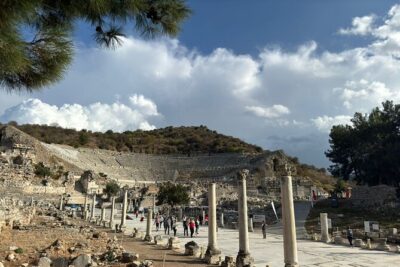
PRIVATE TOUR FOR CRUISERS: Mary’s House (Meryemana) and Ephesus
Read our review →
Top-Rated: Ephesus & Artemis Tour for Cruisers WITH ENTRY TICKETS
Read our review →