
Reviewed · KUSADASI SMALL GROUP TOURS
Ephesus Small Group Day Tour from Kusadasi
Ephesus is the star here, and rightly so. You walk along marble streets past the Celsus Library, Great Theatre, public latrines, baths, and temples that make Roman life feel surprisingly close. I especially like the small group of no more than 15 and the fact that entrance fees, lunch, and hotel or port transport are bundled into the price.
I also like the range of the day. You get the major ruins, the quiet hilltop House of Virgin Mary, Seljuk architecture at Isabey Mosque, and the lonely remains of the Temple of Artemis. The main caution is that some departures may include carpet, leather, jewelry, or pottery stops, so ask about the day’s schedule if you prefer archaeology without shopping detours.
In This Review
- Key points to know before booking
- Why Ephesus is worth giving a full day
- House of Virgin Mary on Bulbul Mountain
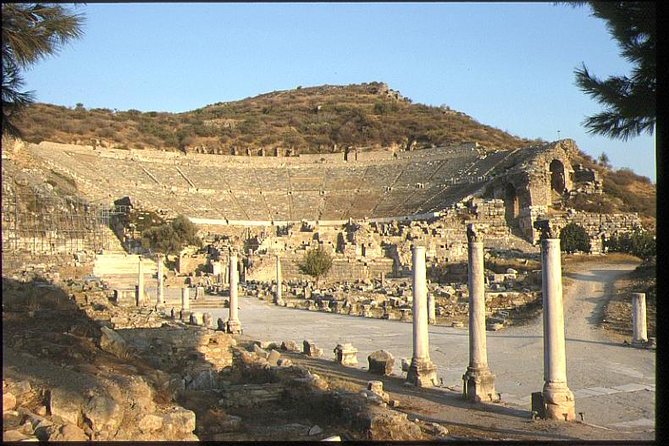
- Walking into the Ancient City of Ephesus
- The Odeon and civic life
- The Temple of Hadrian along Curetes Street
- The Celsus Library, the photographic centerpiece
- The Great Theatre and the scale of Ephesus
- Lunch and the Selçuk stops
- The Temple of Artemis, one lonely column
- A small group, a guide, and the pace
- The commercial-stop question
- Is $174.60 good value?
- Who should book this Ephesus tour?
- Should you book it?
- FAQ
- How long does the Ephesus tour last?
- Where does the tour begin?
- What time is pickup in Kusadasi?
- What time is pickup in Selçuk?
- Is lunch included?
- Are drinks included with lunch?
- What language is the tour offered in?
- How many people can join the group?
- Which entrance fees are included?
- Can I cancel for a full refund?
Key points to know before booking
- Ephesus gets the time it deserves: Expect about two hours among the city’s main ruins, including the Celsus Library and Odeon.
- The group is capped at 15: That is small enough for a more personal guide experience than a large coach tour.
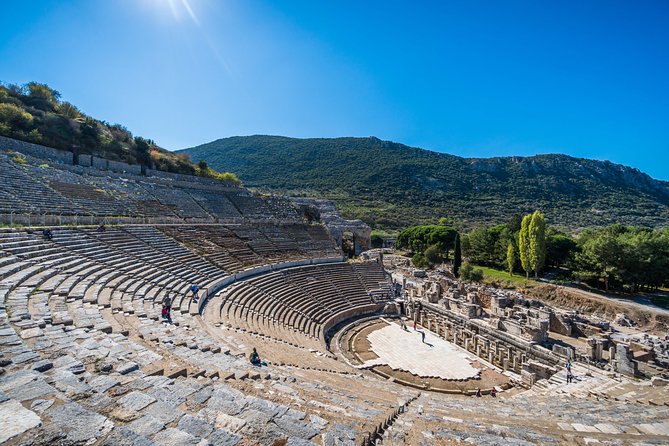
- The Great Theatre is enormous: Its ancient audience could reach about 24,000 people.
- The package covers the costly basics: Hotel or port pickup, air-conditioned transport, lunch, admission fees, and taxes are included.
- The House of Virgin Mary adds a religious stop: The shrine sits on Bulbul Mountain and includes a spring associated with healing beliefs.
- Plan for a long but full day: Pickup usually falls between 8:00 and 9:00 a.m. in Kusadasi, with the final time confirmed the day before.
Why Ephesus is worth giving a full day
Ephesus is one of the few ancient sites where a visitor can grasp the shape of a real city rather than simply admire scattered stones. The old trading center was once the Roman capital of Asia Minor, reaching its height around the first and second centuries AD.
Your guide sets the scene during the short drive from Kusadasi. That context matters because Ephesus is broad and busy with details. Without explanation, the columns and carved fragments can blur together. With a good guide, the marble street becomes a route through civic life, religion, politics, entertainment, and ordinary sanitation.
The tour uses an air-conditioned vehicle, a welcome feature after walking on exposed stone. The day is described as lasting about seven hours, though the scheduled sightseeing blocks add up to a little over four hours before lunch, transport, and any additional stops. That leaves enough room for a substantial visit, but you should not expect to inspect every corner of the site at a slow archaeological pace.
More small group departures from Kusadasi:
- Ephesus: Small Group Tour for Cruise Passengers
★ 4.8 · 1,100 reviews - Ephesus Cruiser Private or Small Group Tour, TICKET and LUNCH Opt
★ 5.0 · 490 reviews - Pamukkale Small Group Tour from Kusadasi Port/Hotels
★ 5.0 · 434 reviews
House of Virgin Mary on Bulbul Mountain
The first listed stop is Meryemana, the House of Virgin Mary, for about 45 minutes. The small house sits high on Bulbul Mountain and is linked by Christian tradition to Mary’s final years after her arrival in Ephesus with St. John.
This is a place of faith rather than a site where the historical claim can be proven. Catholic tradition places Mary’s years here between AD 37 and 45, while Orthodox belief refers to her Dormition rather than Assumption. Your guide can help explain those differences, but the visit remains meaningful even if you approach it as a cultural and religious site.
Inside, you can see the shrine and drink from a spring associated with healing qualities. The setting gives you a quieter beginning than the main ruins, though the uphill location and religious focus will appeal more to some people than others. If ancient architecture is your only interest, this stop takes time away from Ephesus itself. If you enjoy places with continuing spiritual importance, it adds a useful layer to the day.
Walking into the Ancient City of Ephesus
The main Ancient City of Ephesus receives about two hours, making it the heart of the experience. This is where the tour earns its price, provided your guide keeps the group moving while still allowing time for photographs and questions.
You follow the remains of the city through major public spaces and along the marble-paved Arcadian Way. The route includes the Agora, Roman baths, public latrines, and the broad Curetes Street. The latrines are an especially good reminder that ancient urban life involved practical systems, not just grand monuments and emperors.
The city also connects to the cult of Cybele, the Anatolian fertility goddess, and later became an important center of Roman power and trade. That mixture of local religion, Greek influence, and Roman administration is what makes Ephesus so useful for understanding the eastern Mediterranean.
Wear shoes suited to uneven stone and expect sun exposure. The site is open and expansive, so a hat, water, and comfortable clothing will make the walking easier. Drinks are not included, so budget for them separately.
The Odeon and civic life
The Odeon is a small, semicircular theater built in the second century AD. Unlike the huge Great Theatre, this space was used for political meetings, concerts, social gatherings, and smaller performances.
Its size helps you picture the city’s civic machinery. Ephesus was not simply a place of temples and wealthy homes. Decisions were made, public events held, and local life organized in buildings such as this one.
The stop lasts about 15 minutes. That is enough for an explanation and photographs, but not a long architectural study. Listen for how your guide distinguishes the Odeon from the Great Theatre, since the two structures served different purposes.
A few more Kusadasi tours worth comparing
- FOR CRUISERS: Skip The Lines PRIVATE EPHESUS TOUR &On Time Return
★ 5.0 · 8,527 reviews - Top Choice For Cruisers: Ephesus, Mary’s House WITH TICKETS+LUNCH
★ 5.0 · 7,233 reviews - PRIVATE EPHESUS TOUR FOR CRUISERS: On-time Return and Skip-Line
★ 5.0 · 5,807 reviews - PRIVATE NO HIDDEN FEES Ephesus, Mary’s House Guided Tour /GRP OPT
★ 5.0 · 2,455 reviews
The Temple of Hadrian along Curetes Street
The Temple of Hadrian is one of the most attractive structures on Curetes Street. Built at the beginning of the second century AD, it celebrated a visit by Emperor Hadrian from Athens.
The surviving decoration is easy to appreciate even if you are not an ancient art specialist. Its scale is more intimate than the library or theater, and its position along the street shows how monumental architecture shaped the everyday route through the city.
The planned visit is about 15 minutes. That may feel brief because the temple rewards a close look, but a guide can point out the key details before the group continues toward the most famous monument in Ephesus.
The Celsus Library, the photographic centerpiece
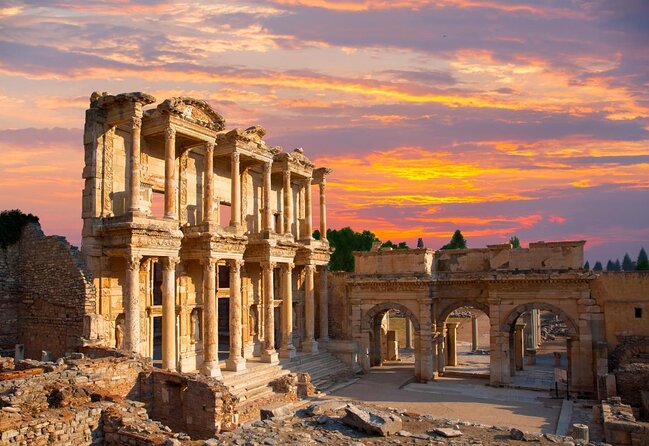
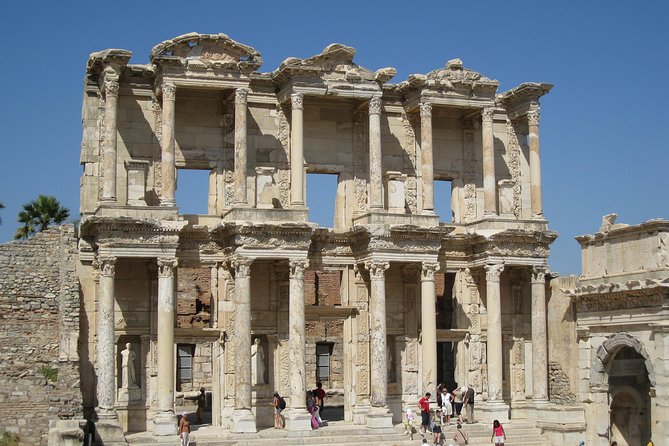
The Celsus Library is the image most people carry home from Ephesus. Built in the early second century AD, its restored facade rises at the end of the street with layered columns, niches, and carefully arranged proportions.
The building looks larger than it truly was because of clever design. The base of the facade curves outward, while the central columns and capitals are larger than those at the sides. This optical trick draws your eye toward the center and makes the structure feel taller and grander.
The facade niches contain replica statues representing Sophia, Arete, Ennoia, and Episteme, translated as Wisdom, Goodness, Thought, and Knowledge. The original library formed part of a larger complex, so the impressive front is only one piece of the building’s story.
You get about 20 minutes here. The best use of that time is to hear the explanation first, then step back for the full facade and take photographs. One guide style noted for this tour places the lecture before the picture-taking, which some people may find formal. Families with older children or young adults may prefer a guide who adds humor and questions to keep the pace lively.
The Great Theatre and the scale of Ephesus
The Great Theatre is one of the day’s most powerful stops. The marble structure began in the Hellenistic period and was later developed into a huge venue capable of holding up to 24,000 people.
The stated stop is about 20 minutes, separate from the broader two-hour walk through Ephesus. From the theater, you can better understand the size of the ancient city and the crowds it once handled. This was not a minor provincial settlement. It was a major center with the public architecture to match.
The theater also helps balance the library. The Celsus facade shows elite learning and civic prestige, while the theater points to mass entertainment and public spectacle. Your guide’s interpretation is important here because the stone seats and stage area are easier to appreciate when you understand their role.
Lunch and the Selçuk stops
Lunch is included and served as a buffet at a local restaurant. Drinks are not part of the package, so bring money for anything you want beyond the meal. The food is Turkish, and one particularly positive account described the lunch as a welcome outdoor break on a restaurant lawn.
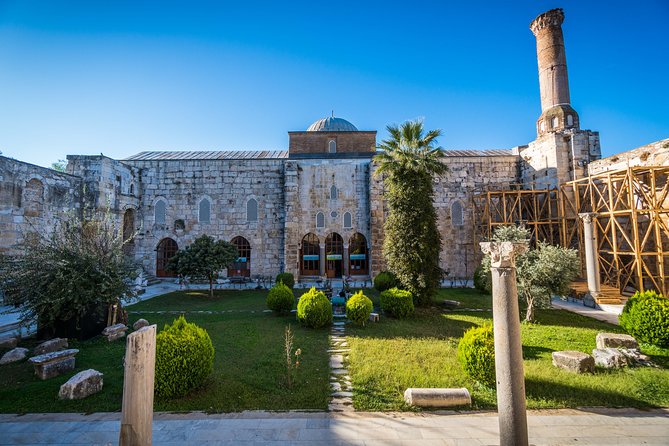
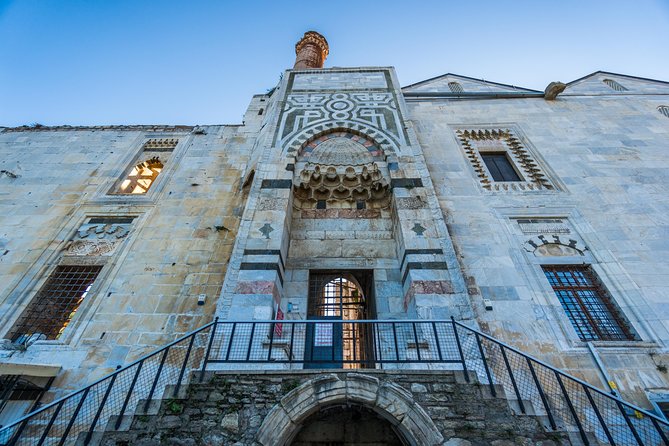
After Ephesus, the route continues to Selçuk for Isabey Mosque. Built in 1375, the mosque reflects the period when Selçuk was the capital of the Aydin Emirate. Its design belongs to the transition between Seljuk and Ottoman styles, giving you a useful architectural contrast with the Greco-Roman ruins.
The mosque visit is scheduled for about 20 minutes. That is enough to admire the exterior and hear the basic story, though it is not a long mosque study. The stop works well because it shows how the area continued to develop long after the ancient city’s Roman peak.
The Temple of Artemis, one lonely column
The final historical stop is the Temple of Artemis, once counted among the Seven Wonders of the Ancient World. At its height, the temple had 127 columns. Today, the site is an open field with a single reconstructed column marking what remains.
This is a stop where expectations matter. Do not come expecting another grand ruin on the scale of the Celsus Library. The power comes from the contrast between the temple’s former fame and its near disappearance.
About 20 minutes is enough to understand the site and take a few photographs. Your guide can explain the temple’s importance, but the physical remains are sparse. I consider it worthwhile because it completes the story of Ephesus, even if it is less visually rewarding than the main city.
A small group, a guide, and the pace
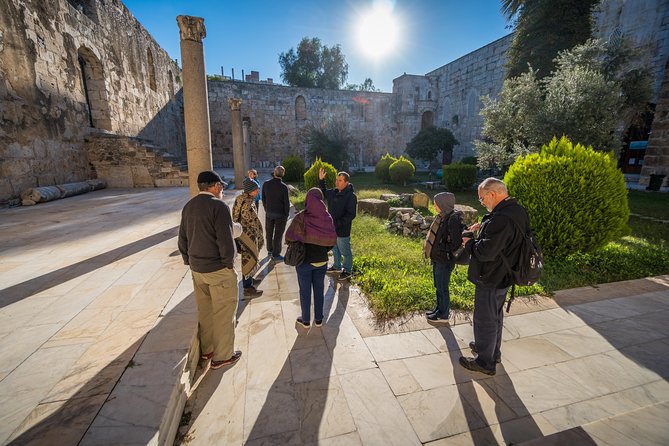
A maximum of 15 people is a sensible group size for Ephesus. You are not trying to hear a guide from the back of a large coach, and the group can usually pause at a monument without taking over the entire path.
The guide is central to the quality of the day. One account described a very capable English-speaking guide and a professional transfer, while another found the material accurate but too much like a university lecture. That contrast gives you a useful booking point: the tour is strong for people who want solid historical explanation, but the style may be less engaging for families who need a lighter pace.
If your group includes older teenagers or young adults, tell the guide you would like time for questions and photographs. A smaller group makes that request realistic. The tour is offered in English, and confirmation is received at booking.
The commercial-stop question
The advertised route focuses on archaeology, religion, architecture, lunch, and Selçuk. Past departures have also included visits to a carpet showroom, leather showroom, jewelry maker, or pottery shop under an arts and crafts heading.
These stops can add time and may be interesting if you want to learn about Turkish crafts. The concern is pressure to buy, especially when the goods are expensive. Several accounts considered these visits the main weakness and would have rated the day higher without them.
I would contact the operator before departure and ask directly if commercial stops are planned for your date. If you are happy to browse, treat them as part of the day and protect your budget. If you want a clean archaeological outing, make your preference clear before pickup.
Is $174.60 good value?
At $174.60 per person, this is not the cheapest way to reach Ephesus. It becomes easier to justify when you add the hotel or port pickup, return transport, air-conditioned vehicle, English-speaking guide, admission fees, and buffet lunch.
The small group also matters. A private tour would normally cost more, while a large coach trip may offer less room for questions. This package sits between those two options and gives you a practical way to cover several sites in one day.
The value depends on how much of the day is spent at the named sights. If commercial stops take up a large part of the schedule, the price feels less attractive. Ask for the planned route and final pickup time the day before. Kusadasi pickup usually falls between 8:00 and 9:00 a.m., while Selçuk pickup is usually between 9:00 and 9:30 a.m.
Who should book this Ephesus tour?
I would choose this tour if you are staying in Kusadasi, want the major Ephesus sights in one organized day, and prefer a small group to arranging separate taxis, tickets, and lunch.
It also suits cruise passengers because port pickup and drop-off are offered. Families can benefit from the simple transport plan, though the guide’s lecture-heavy style may not suit every child. History fans will appreciate the amount of context, while visitors mainly interested in taking photographs should know that the schedule is structured and time at individual monuments is limited.
You can cancel for a full refund if you do so at least 24 hours before the start time. Changes or cancellations made within 24 hours are not accepted for a refund.
Should you book it?
Book this tour if Ephesus is your main goal and you want the practical pieces handled for you. The Celsus Library, Great Theatre, Temple of Hadrian, Odeon, and marble streets provide a strong ancient-city visit, while the House of Virgin Mary, Isabey Mosque, and Temple of Artemis add welcome variety.
Before paying, ask whether carpet, leather, jewelry, or pottery stops will be included. If the answer is yes and you dislike sales visits, look for a more tightly archaeological option. If you accept that possible tradeoff, the small group, included admissions, lunch, and return transport make this a well-packed introduction to the Kusadasi area.
FAQ
How long does the Ephesus tour last?
The experience lasts approximately seven hours, including transport, sightseeing, lunch, and the scheduled stops.
Where does the tour begin?
Pickup is offered from central Kusadasi hotels and from Kusadasi port. Pickup is also available in Selçuk.
What time is pickup in Kusadasi?
Kusadasi pickups usually take place between 8:00 and 9:00 a.m. The final pickup time is confirmed one day before the tour.
What time is pickup in Selçuk?
Selçuk pickups usually take place between 9:00 and 9:30 a.m. The exact time depends on the pickup point and the day’s route.
Is lunch included?
Yes. A buffet lunch at a local restaurant is included.
Are drinks included with lunch?
No. Drinks are not included.
What language is the tour offered in?
The tour is offered in English and includes a local English-speaking guide.
How many people can join the group?
The group has a maximum of 15 participants.
Which entrance fees are included?
Admission fees for the listed stops are included, along with all taxes.
Can I cancel for a full refund?
Yes. You must cancel at least 24 hours before the experience start time for a full refund. Cancellations or changes made less than 24 hours before the start time are not accepted for a refund.
Just added around Kusadasi
- Kusadasi: Private Ephesus Day Trip with Pickup and Drop-off★ 5.0 · 3 reviews
- Kusadasi: Quad Safari★ 4.3 · 3 reviews
- Shore Excursion: Private Pamukkale Tour From Kusadasi Port★ 5.0 · 3 reviews
- Ephesus Shore Excursions For Cruisers★ 5.0 · 3 reviews
- Ephesus and House of Virgin Mary From Kusadasi or Selcuk★ 4.0 · 3 reviews
- Best Of Private Ephesus Tour From kusadasi Cruise Port★ 5.0 · 3 reviews
- Ephesus & Mary’s House & Artemission Tour for Cruisers★ 5.0 · 3 reviews
- The Best of Ephesus Tour For Cruisers★ 4.0 · 3 reviews
Kusadasi Small Group Tours, compared.
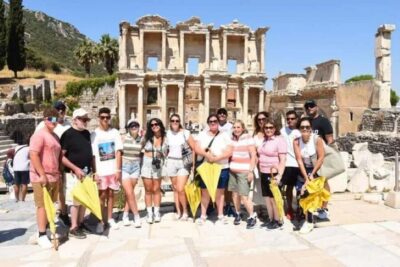
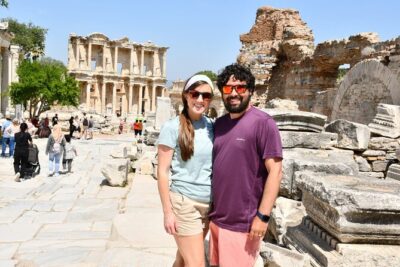
Ephesus Cruiser Private or Small Group Tour, TICKET and LUNCH Opt
Read our review →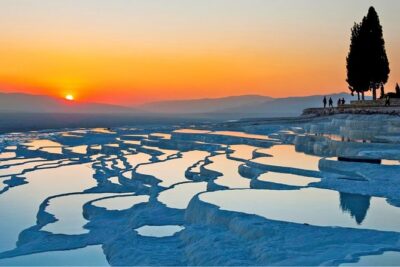
Pamukkale Small Group Tour from Kusadasi Port/Hotels
Read our review →
Pamukkale Small Group Tour From Kusadasi or Selcuk Hotels
Read our review →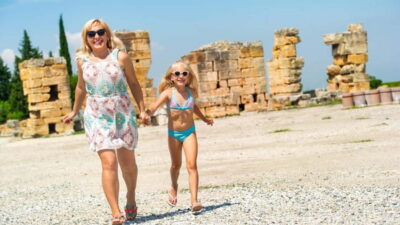
Pamukkale Hot Spring & Hierapolis Small-Group Tour
Read our review →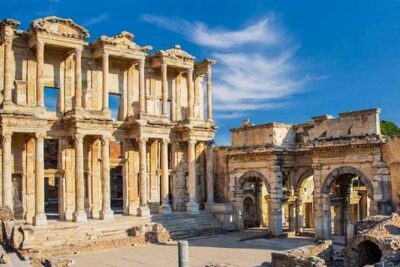
Ephesus Small Group Tour From Kusadasi Port / Hotels
Read our review →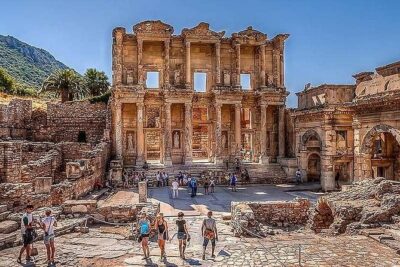
Ephesus Small Group Tour From Kusadasi / Selcuk Hotels
Read our review →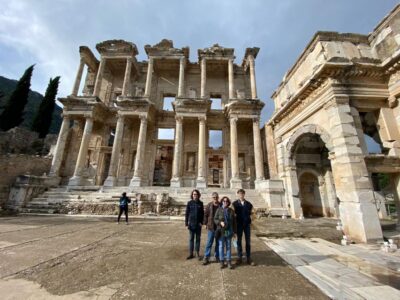
Ephesus and Artemis Skip-the-line Small Group Tour
Read our review →Browse the lists this tour appears in