
Reviewed · HOUSE OF THE VIRGIN MARY TOURS
Ephesus & Virgin Mary’s House Tour (Entry Fees Included)
Ephesus gives you the big Roman spectacle, while the House of the Virgin Mary offers a quiet, personal pause in the hills. In one half-day, you can walk the marble streets where St. Paul spoke, then visit a small stone chapel where Christians and Muslims believe Mary spent her final years.
I like the way this tour joins two very different places. I also like that the entrance fees, transport, guide, and hotel, airport, or port pickup are included, so you can focus on the sites rather than the paperwork. Guides Ahu and Hazan are praised for being especially helpful, with Hazan noted for speaking excellent Spanish.
The main thing to consider is the walking. Ephesus has uneven ancient streets, sun exposure, and some slopes, and the tour is not suitable for wheelchair users or people with mobility impairments. You will also need to leave large bags and luggage behind.
In This Review
- Key details that shape the experience
- Why pairing Ephesus with Mary’s House works
- Walking the marble streets of Ephesus
- The Great Theatre and St. Paul’s connection
- The Celsus Library, more than a library
- The Temple of Hadrian and Medusa
- Ephesus’s early advertisement
- The Trajan Fountain
- The quiet setting of the House of the Virgin Mary
- How the guide affects your visit
- Transport, timing, and what the $150 price covers
- Practical advice for a smoother visit
- Who will get the most from this tour
- Should you book this Ephesus and Mary’s House tour?
- FAQ
- How long does the Ephesus and House of the Virgin Mary tour last?
- What sites are included?
- Are entrance fees included?
- Is transportation included?
- Where can pickup take place?
- Which guide languages are available?
- Is this a private tour?
- What should I bring?
- Can I bring luggage or a large bag?
- Is the tour suitable for wheelchair users?
Key details that shape the experience
- Two major sights in one half-day: Visit Ephesus and the House of the Virgin Mary in about 4.5 to 5 hours.
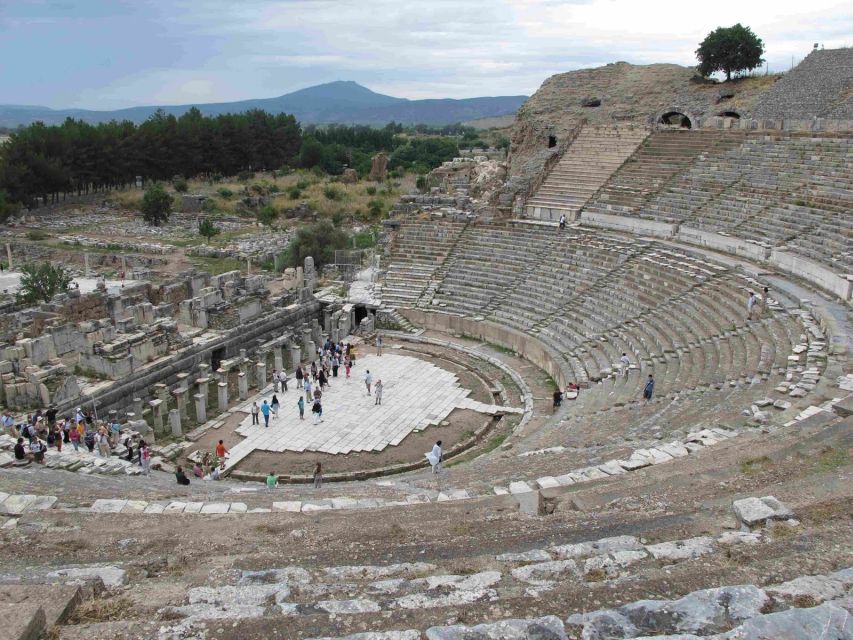
- The Great Theatre held about 24,000 people: See the place where St. Paul spoke to the people of Ephesus.
- The Celsus Library is also a tomb: Your guide can explain why this elegant Roman building had more than one purpose.
- A peaceful mountain stop follows the ruins: The small house linked with Mary has a chapel, spring water, and a wishing wall.
- Transport and admission are covered: Pickup and drop-off are available from your hotel, airport, or port.
- Choose private or small-group touring: The format can give you more room for questions and personal interests.
Why pairing Ephesus with Mary’s House works
Many visits to Ephesus focus only on the ruins. That makes sense, since the ancient city has enough monuments to fill a long morning. But adding the House of the Virgin Mary changes the pace and the mood.
First, you get the noise and scale of a major Greek-Roman city. You walk beside huge public buildings, theatres, fountains, and ceremonial streets. Then the vehicle carries you into quieter mountain country for a modest religious site. The contrast is the point.
I like this combination because Ephesus can feel visually overwhelming. The House of the Virgin Mary gives you time to slow down. You can step into the chapel, look at the wishing wall, and take in the calm before returning to your day.
The tour lasts about 4.5 to 5 hours. That is long enough to see the main features without turning the visit into an all-day commitment. It works well if you are staying in Izmir or Kusadasi, or if you have a pickup arranged from a port or airport.
More visits to the House of the Virgin Mary:
- Top Choice For Cruisers: Ephesus, Mary’s House WITH TICKETS+LUNCH
★ 5.0 · 7,233 reviews - PRIVATE NO HIDDEN FEES Ephesus, Mary’s House Guided Tour /GRP OPT
★ 5.0 · 2,455 reviews - ALL INCLUDED: Ephesus Ruins, Mary’s House Tour incl ENTRY TICKETS
★ 5.0 · 1,670 reviews
Walking the marble streets of Ephesus
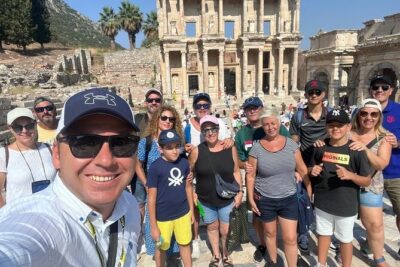
Ephesus is best understood on foot. Your guide leads you along ancient marble streets and uses the surviving buildings to explain how this city worked. The value of a guide is not just the dates. It is knowing what each structure meant to the people who used it.
The city is described as a large open-air museum, but do not expect a quiet indoor museum visit. You will be outside for much of the stop, exposed to sun and walking over old paving. Comfortable shoes, sunglasses, and a sun hat are practical necessities, not packing suggestions.
The route includes several memorable landmarks.
The Great Theatre and St. Paul’s connection
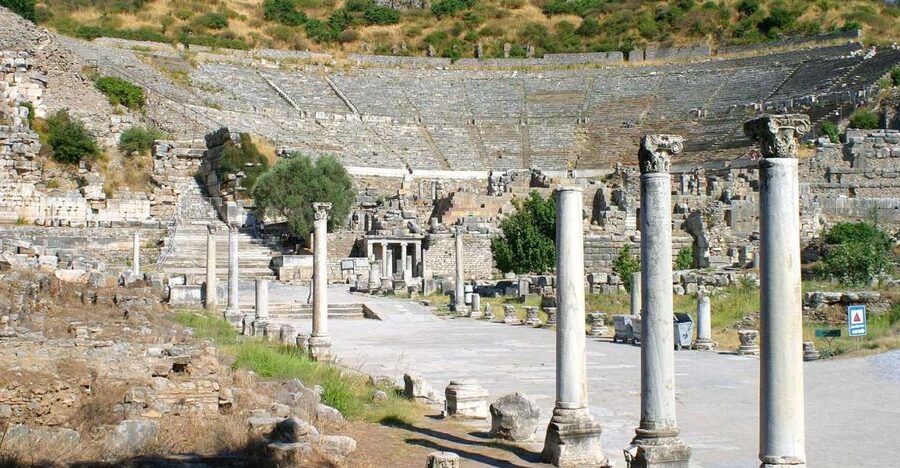
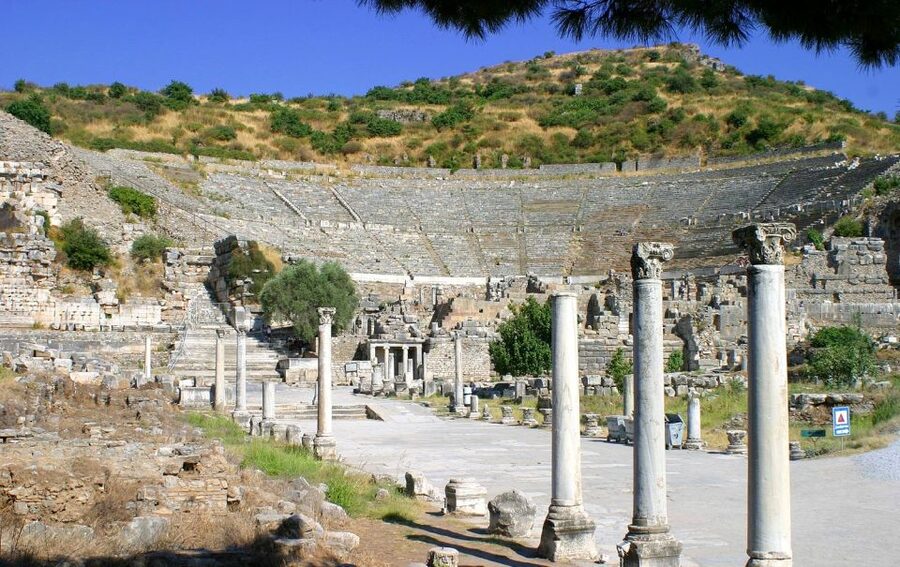
The Great Theatre is the most dramatic stop in Ephesus. It could hold about 24,000 people, giving you a clear sense of the city’s size and public life. The scale is hard to grasp from photographs. Standing near such a large structure helps you picture speeches, performances, and public gatherings in the ancient city.
St. Paul is closely linked with this place. The tour points out that he spoke here, making the theatre especially meaningful for Christian visitors. Even if you are more interested in architecture than religion, the connection helps place Ephesus within the wider story of the early Christian world.
The theatre also requires some attention to footing and stamina. You may encounter uneven surfaces and walking areas that are not easy for anyone with limited mobility. The guide can help explain what you are seeing, but the physical setting remains ancient.
The Celsus Library, more than a library
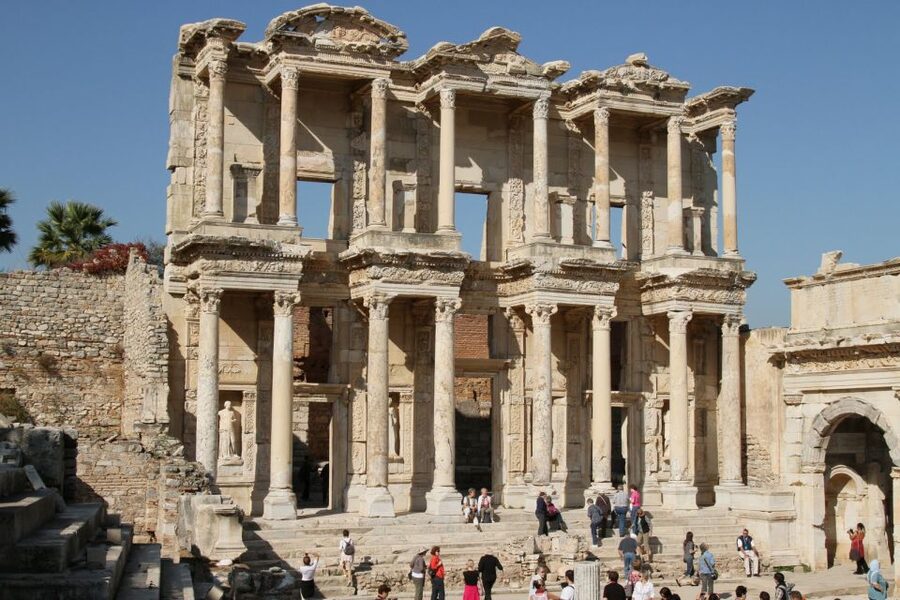
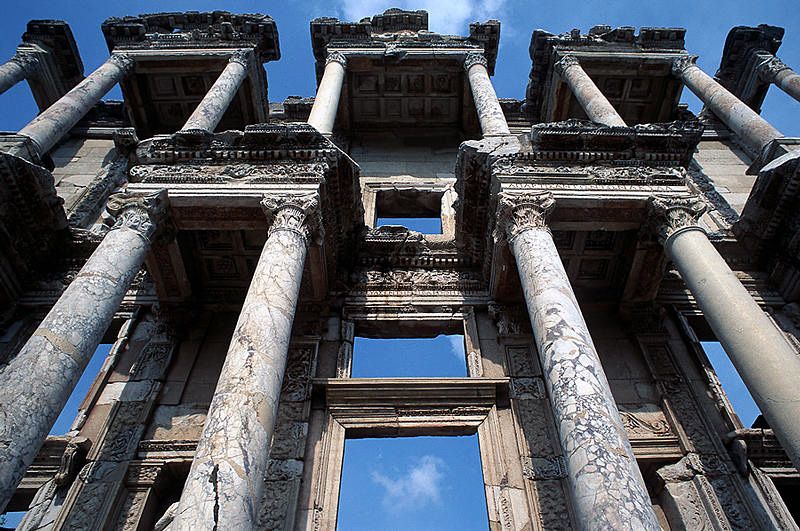
The Celsus Library is the classic Ephesus photograph, and it earns that attention. Its decorated facade is one of the site’s most recognizable views. Your guide explains that the building was not simply a place for books. It also served as a tomb.
That detail gives the monument more meaning. Roman public buildings often carried several roles, and the Celsus Library was part of the city’s civic and memorial life. Look closely at the remaining stonework and the arrangement of the facade rather than treating it as a quick photo stop.
This is one of the places where a live guide adds real value. Without context, you see a beautiful wall. With an explanation, you begin to understand how architecture expressed status, memory, and public identity.
A few more Kusadasi tours worth comparing
- FOR CRUISERS: Skip The Lines PRIVATE EPHESUS TOUR &On Time Return
★ 5.0 · 8,527 reviews - PRIVATE EPHESUS TOUR FOR CRUISERS: On-time Return and Skip-Line
★ 5.0 · 5,807 reviews - For Ship Guests:BEST SELLER EPHESUS PRIVATE TOUR & On Time Return
★ 5.0 · 2,029 reviews - Ephesus Temple of Artemis and House of Mary Private Half Day Tour
★ 5.0 · 1,573 reviews
The Temple of Hadrian and Medusa
The Temple of Hadrian is another important stop along the ancient streets. The tour calls attention to a stone head of Medusa on the wall. Medusa was believed to protect against bad luck, so this is not just decorative carving.
Small details like this keep the walk from becoming a march between famous buildings. The theatre and library show the city’s public scale. Medusa reveals the beliefs and protective symbols that people encountered in daily life.
I recommend asking your guide to point out details that are easy to miss. The included guide service is especially useful here, since the surviving ruins do not always explain themselves.
Ephesus’s early advertisement
The tour also includes an unusual carving described as the world’s first advertisement. Look for a footprint and a heart carved into the stone. The mark showed people the way to an old meeting place.
It is a funny and memorable detail, especially after the grand monuments. Ancient cities were not only about emperors and temples. People needed signs, directions, and practical information too. This carving gives Ephesus a human touch.
Because it is a small feature, you could easily walk past it without help. Keep your eyes open and listen when the guide points out the symbol.
The Trajan Fountain
At the Trajan Fountain, only one stone foot remains from a large statue of the emperor. That fragment may sound modest compared with the Great Theatre, but it makes an important point: what survives is often only a piece of the original monument.
The remains help you imagine the scale of the fountain and the statue that once occupied the space. I like stops such as this because they encourage you to read the ruins rather than expect every structure to be complete.
The quiet setting of the House of the Virgin Mary
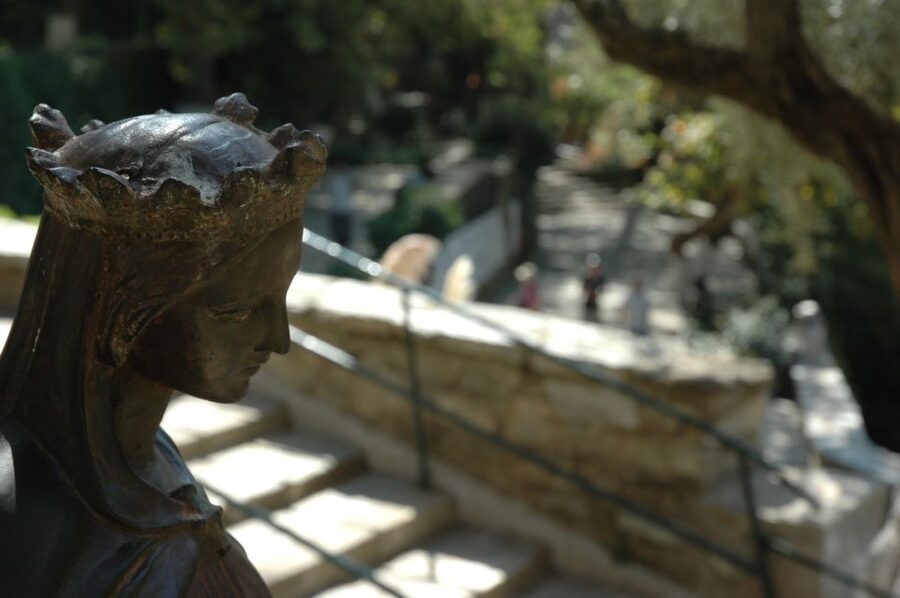
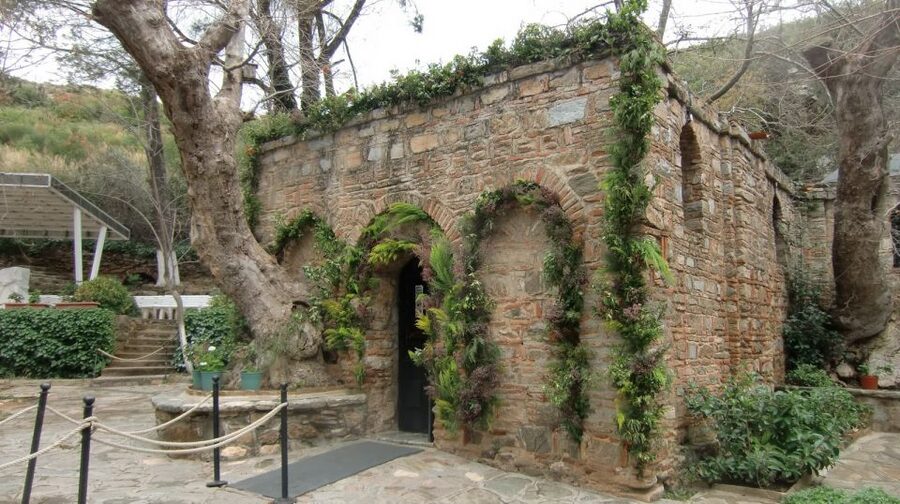
After Ephesus, you travel into the mountains to a small stone house associated with the Virgin Mary. Many Christians and Muslims believe Mary lived her final years here. The site is therefore religiously important, but it is also physically different from Ephesus.
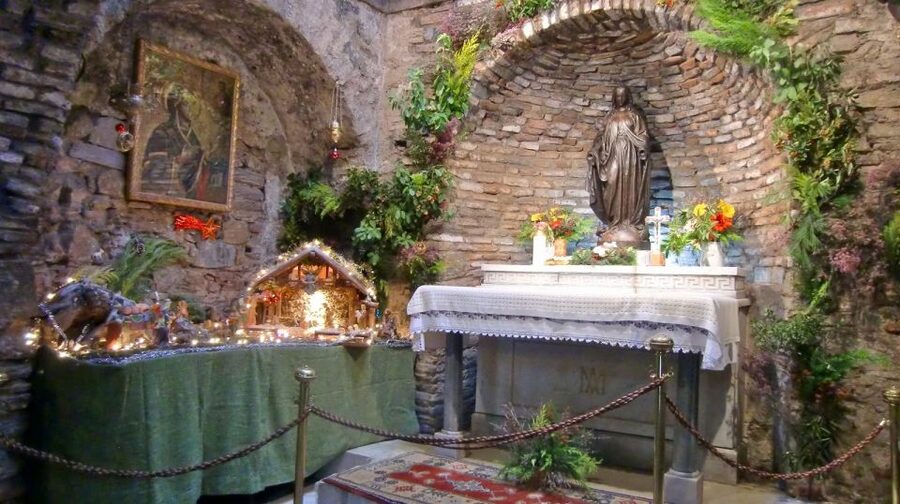
You leave behind large ruins and public spaces for a smaller, quieter place. Inside is a chapel. Outside, you can see the wishing wall, where people attach prayers and wishes on pieces of cloth or paper.
The visit is not about grand architecture. The power of the stop comes from its atmosphere and its meaning to people who come to pray. You may find the setting more reflective than sightseeing-focused. Give yourself a few quiet minutes instead of treating it as just another scheduled stop.
There is also a natural spring where you can drink the water. Many people believe it has blessings. The information provided does not promise a particular religious practice or ceremony, so think of it as a chance to pause, observe, and take part in the site in your own way.
For Christian visitors, this stop adds a personal connection to the Ephesus visit. You have already seen the theatre associated with St. Paul, then you visit a place linked with Mary. For visitors of other faiths, the site still offers a chance to learn about a place held sacred by both Christians and Muslims.
How the guide affects your visit
A guide is central to this experience. Ephesus has many structures, but the meaning of the site is not always obvious from the stones alone. A good explanation can connect the Great Theatre, the Celsus Library, St. Paul, Roman civic life, and the smaller symbols along the streets.
The available languages include English, Spanish, Italian, Dutch, Greek, German, Russian, and French. Japanese language service is also listed among the guide options. Confirm your preferred language when booking, especially if it is important to you.
Two guide names associated with strong service are Ahu and Hazan. Ahu is described as attentive to individual wishes, while Hazan is noted for excellent Spanish and clear explanations of the sites and local culture. That kind of personal attention matters more on a private tour than on a large coach outing.
A private or small-group format is available. I would consider paying for the private option if you want to ask many questions, move at a slower pace, or make the history of Ephesus the main focus of your day. A small group can offer a lower-cost feel while still keeping the tour more personal than a large group.
Transport, timing, and what the $150 price covers
The price is $150 per person. That is not the cheapest way to see Ephesus, but the value depends on how many services you would otherwise arrange yourself.
The price includes a licensed professional guide, a luxury air-conditioned vehicle, pickup and drop-off, and entrance fees to the museums and sites on the itinerary. Pickup can be arranged at your port, airport, or hotel. For a visitor who wants a simple half-day plan, that bundled cost can be worthwhile.
The air-conditioned vehicle is especially useful after walking in the sun. You do not have to work out separate transport from Izmir or Kusadasi, buy site tickets on your own, or find your way between Ephesus and the mountain stop.
Still, be clear about what is not included. Anything not specifically listed is your responsibility. The provided information does not list meals, drinks, or personal purchases as included, so budget separately for those.
The tour runs for 4.5 to 5 hours, with starting times based on availability. That flexible start can help you fit the visit around a port call, hotel schedule, or airport pickup. You should confirm the exact pickup time before setting other plans.
Practical advice for a smoother visit
Wear shoes that can handle uneven stone streets. Ephesus is not a place for thin sandals or footwear that makes you worry about every step. The House of the Virgin Mary is quieter, but the overall tour still involves walking.
Bring a passport or ID card, sunglasses, a sun hat, and a camera. Sun protection matters because the main archaeological stop is outdoors. Large bags and luggage are not allowed, so arrange storage before pickup if you are coming directly with substantial baggage.
The activity information also says video recording is not allowed. Follow the rule at the sites and rely on photographs where permitted. A camera is specifically recommended, but remember that taking pictures should not replace looking carefully at the ruins.
This tour is not suitable for wheelchair users or people with mobility impairments. That is one of the clearest reasons to reconsider before booking. Ancient paving and the physical character of the archaeological site can make the visit difficult even when transport is comfortable.
You can cancel up to 24 hours in advance for a full refund, and the reserve-now, pay-later option keeps payment flexible. Those policies are useful if your plans around a port or airport are still changing.
Who will get the most from this tour
I would recommend this outing to first-time visitors who want the essential Ephesus monuments without arranging transport and tickets on their own. It is also a strong choice for Christian visitors who want to connect the city with St. Paul and the House of the Virgin Mary.
History fans will appreciate the mix of large public monuments and small human details. The Celsus Library, Great Theatre, Temple of Hadrian, Medusa carving, early advertisement, and Trajan Fountain create a varied walk rather than a single repetitive ruin field.
The tour also suits couples, families with older children, and cruise passengers who need a compact schedule. The private option is worth considering if you have a specific interest in Roman architecture, early Christianity, or local culture.
I would be cautious if you want a relaxed day with very little walking. Ephesus is the heart of the tour, and its ancient streets demand comfortable footwear and some physical effort. People with mobility impairments should choose a different experience.
Should you book this Ephesus and Mary’s House tour?
Book it if you want the major Ephesus sights, a guide who can explain the details, and a meaningful second stop in the same half-day. The strongest reasons are the simple logistics, included admission, air-conditioned transport, and the contrast between the huge theatre and the quiet chapel in the mountains.
Choose the private format if personal attention matters to you. The positive experiences associated with Ahu and Hazan suggest that guide quality can make a real difference, especially when you want explanations in Spanish or detailed help throughout the visit.
Skip it if you need wheelchair access, want to carry large luggage, or prefer to explore Ephesus slowly for an entire day. For everyone else, the $150 price can be fair when you value convenience and expert interpretation as much as the ruins themselves.
FAQ
How long does the Ephesus and House of the Virgin Mary tour last?
The tour lasts approximately 4.5 to 5 hours.
What sites are included?
The itinerary includes ancient Ephesus and the House of the Virgin Mary. At Ephesus, you see the Great Theatre, Celsus Library, Temple of Hadrian, Trajan Fountain, and the carving described as an early advertisement.
Are entrance fees included?
Yes. Entrance fees to the museums and sites included in the itinerary are covered.
Is transportation included?
Yes. Transportation is provided in a luxury air-conditioned vehicle, with pickup and drop-off included.
Where can pickup take place?
Pickup is available from your hotel, port, or airport. You should indicate your preferred pickup location when booking.
Which guide languages are available?
Guide languages listed include Spanish, English, Italian, Dutch, Greek, German, Russian, and French. Japanese language service is also listed among the available professional guide options.
Is this a private tour?
Private and small-group options are available.
What should I bring?
Bring your passport or ID card, comfortable walking shoes, sunglasses, a sun hat, and a camera.
Can I bring luggage or a large bag?
No. Luggage and large bags are not allowed.
Is the tour suitable for wheelchair users?
No. The activity is not suitable for wheelchair users or people with mobility impairments.
Just added around Kusadasi
- Kusadasi: Private Ephesus Day Trip with Pickup and Drop-off★ 5.0 · 3 reviews
- Kusadasi: Quad Safari★ 4.3 · 3 reviews
- Shore Excursion: Private Pamukkale Tour From Kusadasi Port★ 5.0 · 3 reviews
- Ephesus Shore Excursions For Cruisers★ 5.0 · 3 reviews
- Ephesus and House of Virgin Mary From Kusadasi or Selcuk★ 4.0 · 3 reviews
- Best Of Private Ephesus Tour From kusadasi Cruise Port★ 5.0 · 3 reviews
- Ephesus & Mary’s House & Artemission Tour for Cruisers★ 5.0 · 3 reviews
- The Best of Ephesus Tour For Cruisers★ 4.0 · 3 reviews
House of the Virgin Mary Tours, compared.
Top Choice For Cruisers: Ephesus, Mary’s House WITH TICKETS+LUNCH
Read our review →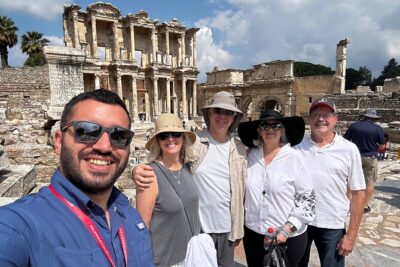
ALL INCLUDED: Ephesus Ruins, Mary’s House Tour incl ENTRY TICKETS
Read our review →
Ephesus Temple of Artemis and House of Mary Private Half Day Tour
Read our review →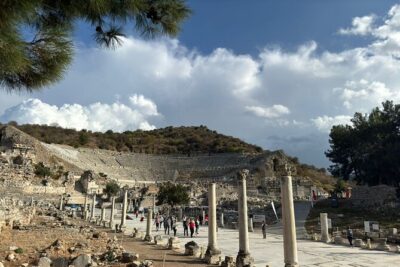
PRIVATE TOUR FOR CRUISERS: Mary’s House (Meryemana) and Ephesus
Read our review →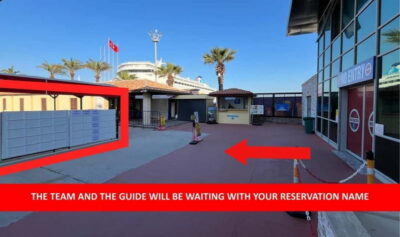
Mary’s House Private & Group Tour with Ticket+Lunch
Read our review →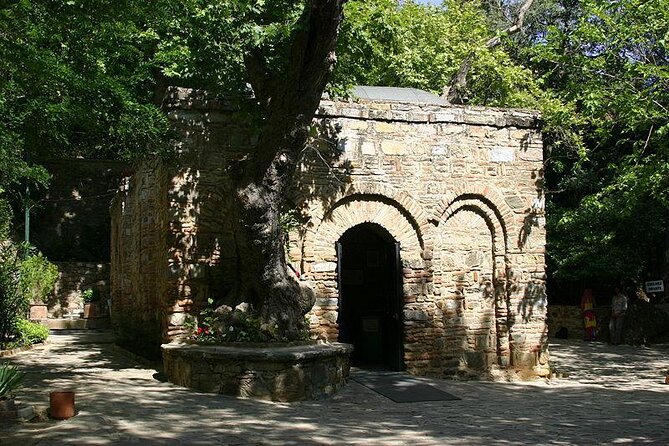
ALL INCLUSIVE Private Ephesus, House of Mary, LUNCH, Entrances
Read our review →
PRIVATE Ephesus and House of Virgin Mary Tour (Skip-The-Line)
Read our review →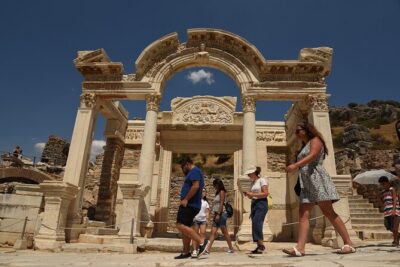
Top-Rated Ephesus and House of Virgin Mary Tour for Cruisers
Read our review →Browse the lists this tour appears in