
Reviewed · PRIENE, MILETUS & DIDYMA TOURS
Ephesus, Priene, Miletos and Didyma Tour
Four ancient sites in one day is the big draw here. You move from the Roman grandeur of Ephesus to the hilltop ruins of Priene, the philosopher’s city of Miletos, and the vast Temple of Apollo at Didyma. It is a serious history day, not a quick photo stop at one famous ruin.
I like the private format, which gives you more room to ask questions and adjust the pace. I also like that entrance fees, a driver, an air-conditioned vehicle, and hotel or port pickup are included. The tradeoff is simple: eight hours covers a lot of ground, so each site gets less quiet wandering time than it would on a separate visit.
In This Review
- Key points at a glance
- Why this four-site route is worth your day
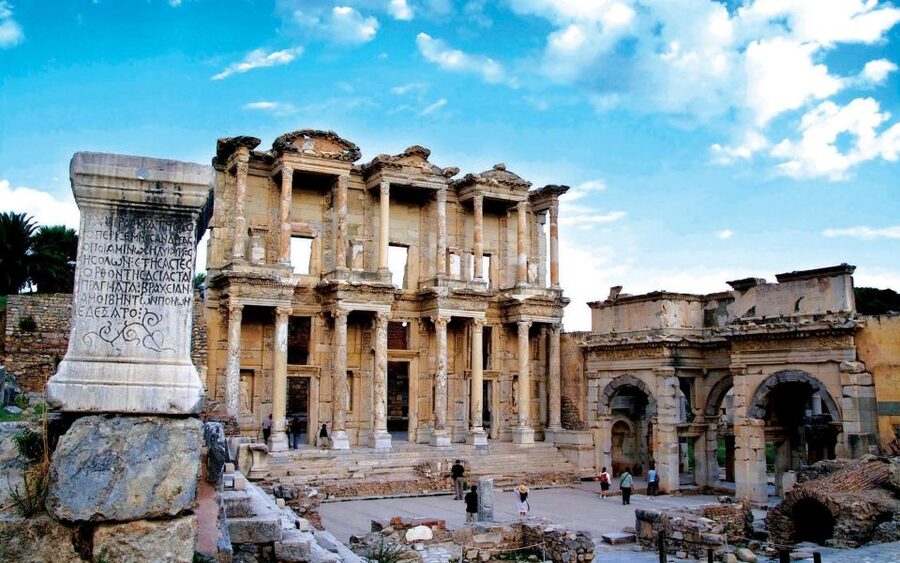
- Starting at Ephesus, the Roman showpiece
- Priene and the ancient city grid
- Miletos, where the harbor met philosophy
- Didyma and the unfinished Temple of Apollo
- The guide and vehicle make a real difference
- What to bring and what the day feels like
- Who should book this private day?
- Should you book the Ephesus, Priene, Miletos, and Didyma tour?
- FAQ
- How long does the tour last?
- Where does pickup take place?
- Which ancient sites are included?
- Are entrance fees included?
- Is transportation included?
- Is the tour private?
- Which languages are available?
- Is the tour suitable for wheelchair users?
Key points at a glance
- Four major ancient sites in one route: Ephesus, Priene, Miletos, and Didyma give you a broad view of Aegean history.
- Ephesus goes beyond the Library of Celsus: See the Great Theatre, Marble Street, and the optional Terrace Houses.
- Priene delivers the best setting: Its hillside ruins look over the Meander River delta.
- Miletos connects archaeology with ideas: This was the home of early philosophers such as Thales and Anaximander.
- Didyma ends the day with scale and mystery: The Temple of Apollo preserves three huge standing columns.
- Private transport and flexible guidance: Pickup is available from Kusadasi, Aydin, and Izmir locations, with guides in several languages.
Why this four-site route is worth your day
Most visitors coming to Kusadasi focus on Ephesus, and rightly so. It is one of the Aegean coast’s great ancient sites. But Ephesus alone can leave you with a narrow picture of the region, mostly Roman and urban. This route adds four different pieces: a planned Hellenistic city, a seafaring intellectual center, and a sanctuary built around prophecy.
That range is the main reason I find the tour appealing. You are not simply collecting ruins. You are seeing how cities served different purposes in the ancient world: trade, government, religion, education, and public life.
At $210 per person, the value depends on your priorities. A private vehicle, professional driver, guide, pickup, and entry to all four sites are included. That removes several costs and makes the price easier to justify if you are traveling alone or with a small party. You also avoid arranging transport between places that are spread across the Aegean region.
The limitation is time. Four major sites in eight hours demand a steady pace. If you want long breaks, careful photography, or a detailed study of every inscription, this will feel tight. If you have one day available and want the widest possible historical sweep, it is a strong use of that day.
More Priene, Miletus and Didyma trips:
- Priene Miletos Didyma Tour From Kusadasi / Selcuk Hotels
★ 5.0 · 15 reviews - NO HIDDEN FEES : Private Ephesus – Miletus – Didyma
★ 5.0 · 13 reviews - Kusadasi Shore Excursion: Private Full-Day Tour to Ephesus, Didyma and Miletus
★ 4.5 · 12 reviews
Starting at Ephesus, the Roman showpiece
Ephesus is the most famous stop and usually the most immediately impressive. Your walk takes you along Marble Street, through the old urban center, and toward monuments that show how much money and civic pride once flowed through this city.
The Library of Celsus is the visual star, but the Great Theatre gives you a better sense of daily public life. It could hold about 24,000 people and was used for performances, political assemblies, and gladiatorial events. Your guide can help turn the stone seating into a picture of a noisy public gathering rather than an empty shell.
The route also points out the famous ancient advertisement: a carved footprint and heart associated with the brothel. It is a small detail, but exactly the sort of thing that makes an archaeological walk feel human. The Marble Street was not only a ceremonial avenue. It was part of a working city, filled with people, commerce, and public messages.
The connection with Cleopatra and St. Paul adds familiar names to the setting, though the real pleasure is seeing the urban plan itself. Ephesus lets you read the city through its streets, public buildings, theatre, and grand facades.
There is an optional premium upgrade for the Terrace Houses. I would consider it if you care about domestic life and ancient decoration. These were the lavish homes of wealthy Ephesians, with mosaics and frescoes that offer a more intimate contrast to the large public monuments. If your priority is seeing all four main sites without stretching the schedule, ask how the upgrade affects your time.
Ephesus can be sunny and exposed, so bring a hat, sunglasses, and comfortable shoes. The marble surfaces and walking required here make footwear more important than looking dressed up for the port.
Priene and the ancient city grid
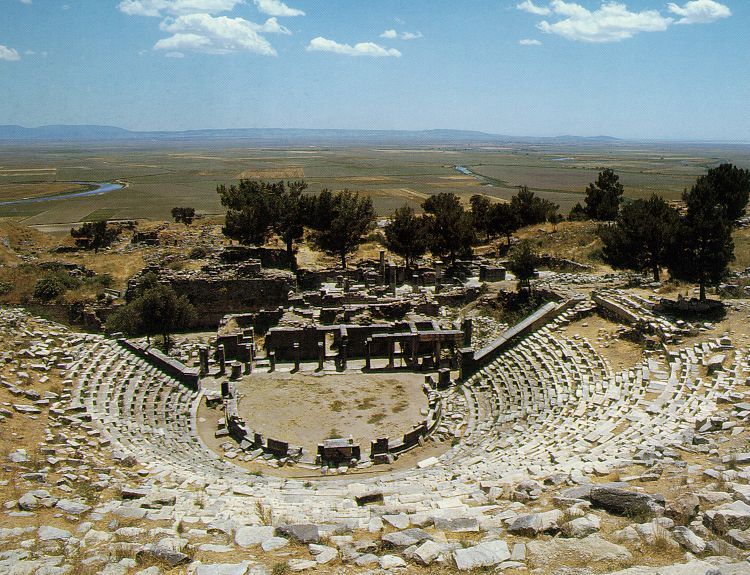
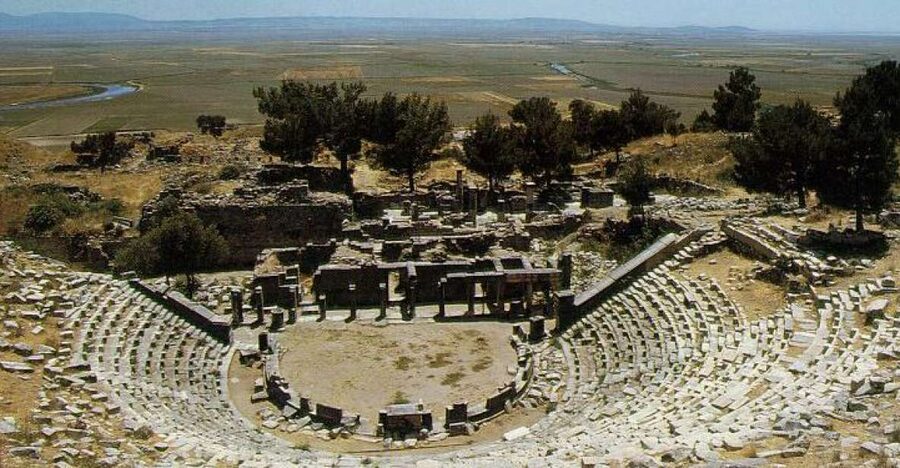
Priene changes the mood completely. Instead of a large Roman center, you reach a hillside Hellenistic city planned on a strict grid. This is one of the most interesting stops for anyone who enjoys city design, because the streets and public buildings reveal a deliberate plan rather than gradual growth.
The Temple of Athena Polias is the key monument. It represents the Ionic architectural tradition and gives your guide a good chance to explain how Hellenistic cities arranged sacred, civic, and residential areas.
The hillside position is part of Priene’s appeal. From the theatre, you get broad views toward the Meander River delta. The setting helps explain the city’s strategic value, and it also gives you a break from the enclosed feel of Ephesus. Priene is not just about standing beside columns. You can see how geography shaped the city.
The access is also the day’s physical challenge. The site is on a slope, and the tour is not suitable for wheelchair users. Even for travelers who walk easily, Priene adds uneven ground and inclines after the morning at Ephesus. Plan on using the shoes you would choose for a nature trail, not smooth dress shoes.
Priene may appeal most to visitors who like patterns, plans, and the bones of a city. Its ruins are less instantly recognizable than Ephesus, but the site rewards careful attention. Ask your guide to point out how the grid relates to the theatre, temple, and views below.
Miletos, where the harbor met philosophy
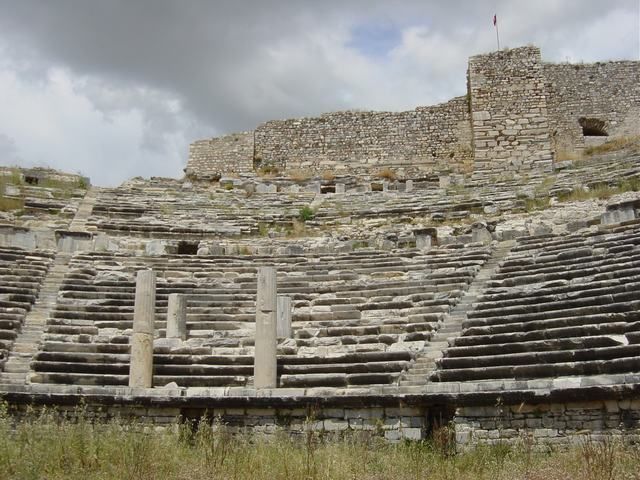
Miletos brings a different kind of importance. It was a maritime center and the birthplace of early Greek philosophy. Thales and Anaximander are linked with the city, so this stop gives the tour an intellectual thread that the other sites do not.
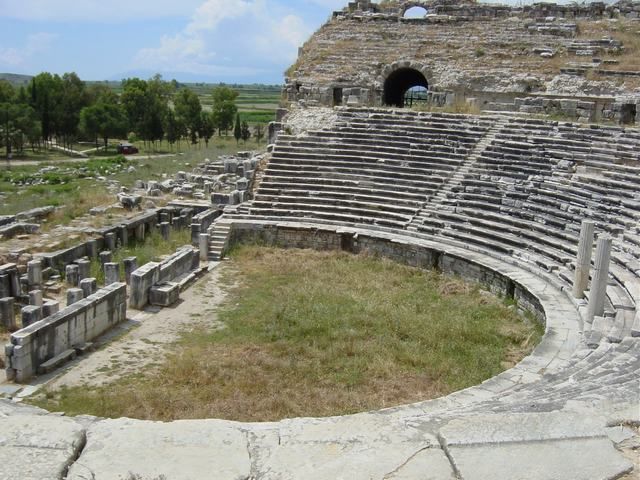
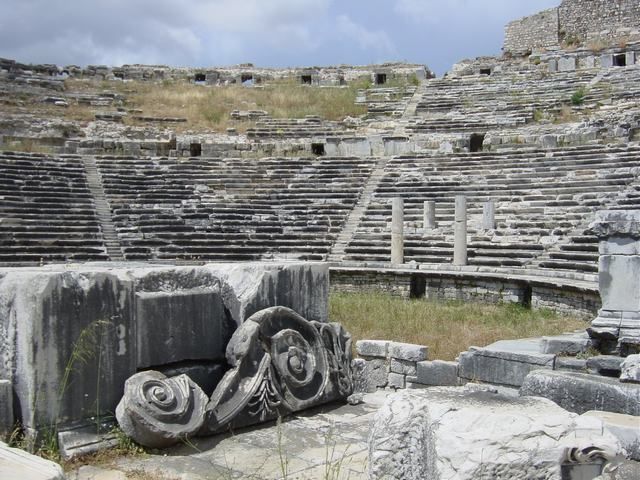
The theatre is the main visual anchor. It could hold around 15,000 people, a reminder that Miletos had the wealth and population to support major public gatherings. Your guide can also place the theatre within the city’s wider role as a harbor and trading center.
The Baths of Faustina are another highlight. They were built by Faustina, wife of Emperor Marcus Aurelius, and are described as remarkably intact. Baths are useful archaeological stops because they show a practical side of ancient life. They were social spaces as well as places for washing, and their surviving structure helps you picture how Roman public facilities worked.
You will also see the Agora, once one of the largest marketplaces of the ancient world. The contrast is striking: a place once tied to ships and Mediterranean trade is now quiet. That change gives Miletos a different emotional tone from Ephesus. Ephesus feels like a grand city center; Miletos makes you think about commerce, ideas, and the effects of a changing coastline.
As at Priene, the interest here grows when you listen to the explanation. Without context, a theatre and scattered walls can blur together after several hours of ruins. With a good guide, Miletos becomes the city of thinkers, traders, and public institutions.
A few more Kusadasi tours worth comparing
- FOR CRUISERS: Skip The Lines PRIVATE EPHESUS TOUR &On Time Return
★ 5.0 · 8,527 reviews - Top Choice For Cruisers: Ephesus, Mary’s House WITH TICKETS+LUNCH
★ 5.0 · 7,233 reviews - PRIVATE EPHESUS TOUR FOR CRUISERS: On-time Return and Skip-Line
★ 5.0 · 5,807 reviews - PRIVATE NO HIDDEN FEES Ephesus, Mary’s House Guided Tour /GRP OPT
★ 5.0 · 2,455 reviews
Didyma and the unfinished Temple of Apollo
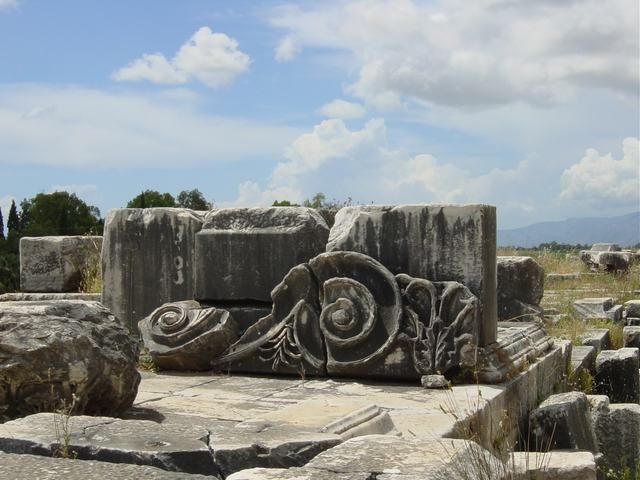
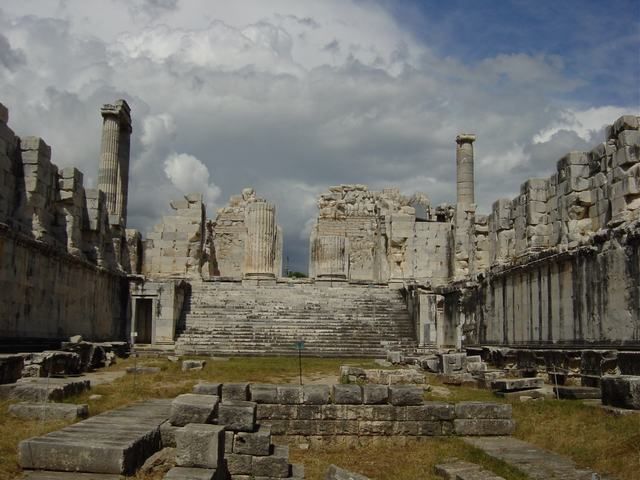
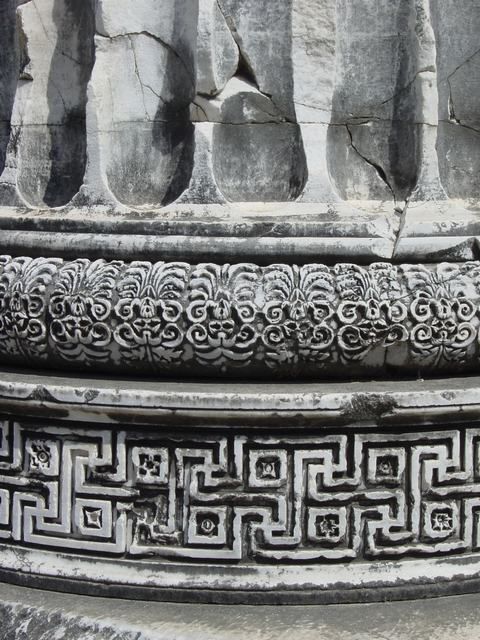
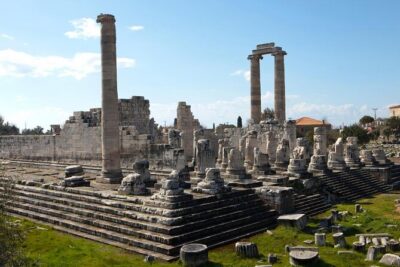
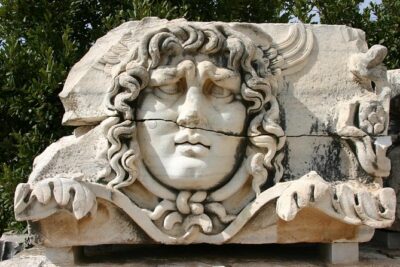
Didyma is a sanctuary rather than a city, and it makes a powerful final stop. The Temple of Apollo was one of the largest temples in the Hellenic world. Three enormous fluted columns still rise from the site, giving you an immediate sense of the project’s scale.
The temple was linked to an oracle that rivaled Delphi. Pilgrims came along the Sacred Way seeking prophecies, including answers that could affect rulers and states. That religious purpose gives Didyma a different atmosphere from the civic ruins earlier in the day.
The most interesting detail is that the temple’s grand scale also suggests how difficult it was to complete. What you see is not a perfect, finished building restored to its original form. You see a huge sacred project through its surviving columns, foundations, and architectural fragments.
Didyma rewards looking upward and outward. The columns are easy to photograph, but listen for the explanation of how pilgrims approached the sanctuary and how the oracle functioned. The mythological stories connected with Apollo and prophecy help tie the stones to the beliefs that gave the place meaning.
Ending here is sensible. After seeing cities built for people, trade, and government, you finish at a place built to communicate with the divine. It gives the day a clear final chapter rather than another similar urban ruin.
The guide and vehicle make a real difference
The private group format is one of the tour’s strongest practical features. Instead of following a large crowd, you can ask for clarification, spend more time at a favorite monument, or keep moving when a section is less important to you.
Several languages are offered, including English, Spanish, Italian, Dutch, Greek, German, French, and Russian. The included guide information specifically lists English, German, French, and Dutch, so confirm your preferred language when booking.
Guide names that appear with this experience include Olkan or Volkan, with Mohammed serving as driver on one praised outing. If you are assigned this team, expect a guide who can answer questions and a driver noted for a comfortable driving style. The guide’s role matters here because four sites require more than basic directions. You need someone who can explain why each place matters without turning every stop into a lecture.
The air-conditioned vehicle is another practical benefit. The route covers four sites beyond Kusadasi, and a private vehicle gives you a quieter place to rest between walks. Pickup and drop-off are available at Kusadasi port or local hotels, with pickup also listed for hotels in Aydin and Izmir.
The exact starting time depends on availability. Since the tour lasts eight hours, check that the schedule fits your port call or hotel plans before committing.
What to bring and what the day feels like
Bring a passport or ID card, comfortable shoes, sunglasses, a sun hat, and a camera. The passport or ID requirement is worth remembering even if you are only visiting archaeological sites. Personal items are not included, and no meal is listed, so plan your expectations around the stated inclusions rather than assuming lunch or shopping stops are part of the price.
The walking is the key physical issue. Ephesus involves extensive ancient streets, Priene has a hillside setting, and the other sites include open archaeological ground. This is not suitable for wheelchair users, and it may be tiring for anyone who struggles with uneven surfaces or slopes.
The schedule also calls for sensible priorities. At Ephesus, focus on the theatre, Marble Street, Library of Celsus, and any Terrace Houses upgrade you choose. At Priene, give yourself time for the Temple of Athena Polias and the view from the theatre. At Miletos, concentrate on the theatre, Baths of Faustina, and Agora. At Didyma, save energy for the Temple of Apollo and Sacred Way.
That approach helps you avoid trying to memorize every fragment. Ancient sites reward a few clear stories more than a rushed checklist.
Who should book this private day?
I would recommend this tour to anyone with a strong interest in archaeology, ancient cities, mythology, or Mediterranean history. It is especially useful if you are traveling alone, have only one free day from Kusadasi, or want to see more than Ephesus without arranging several transfers.
It also suits families or couples who prefer a flexible private setting. The guide can answer questions at your level, and the vehicle gives you a place to recover between stops. The positive feedback attached to the experience repeatedly points to helpful guides, good organization, and flexibility for individual needs.
I would be more cautious if you want a slow, relaxed day. Four sites are a lot, and the route leaves little room for lingering at every theatre or temple. You should also think twice if hills, heat, or uneven ruins make walking difficult.
Cancellation is available without penalty up to 24 hours before departure, and you can reserve now and pay later. Those terms help if your Kusadasi plans are still changing, but the main booking decision remains pace: broad coverage or leisurely depth.
Should you book the Ephesus, Priene, Miletos, and Didyma tour?
Book it if your ideal day includes four very different ancient sites, a private vehicle, and a guide who can connect Roman, Hellenistic, philosophical, and religious history. The $210 price is reasonable for a private, all-entry tour if you would otherwise need to arrange transport and separate admission yourself.
Skip it if Ephesus is your only priority or if you prefer to spend most of a day at one site. For everyone else, this route offers a useful correction to the usual Ephesus-only visit. You see the famous marble streets, then follow the story outward to planned cities, seaports, philosophers, and an oracle temple.
FAQ
How long does the tour last?
The tour lasts eight hours.
Where does pickup take place?
Pickup and drop-off are available at Kusadasi port or local hotels. Hotel pickup is also listed for locations in Aydin and Izmir.
Which ancient sites are included?
The route includes Ephesus, Priene, Miletos, and Didyma.
Are entrance fees included?
Yes. Entrance fees for the museums and archaeological sites listed in the route are included.
Is transportation included?
Yes. The tour includes an air-conditioned luxury vehicle and a professional driver.
Is the tour private?
Yes. The experience is arranged for a private group.
Which languages are available?
Languages listed include Spanish, English, Italian, Dutch, Greek, German, French, and Russian. The included guide information specifically lists English, German, French, and Dutch, so confirm your preferred language when booking.
Is the tour suitable for wheelchair users?
No. The tour is listed as unsuitable for wheelchair users. Comfortable walking shoes are recommended because the route includes extensive ancient ruins and a hillside site.
Just added around Kusadasi
- Kusadasi: Private Ephesus Day Trip with Pickup and Drop-off★ 5.0 · 3 reviews
- Kusadasi: Quad Safari★ 4.3 · 3 reviews
- Shore Excursion: Private Pamukkale Tour From Kusadasi Port★ 5.0 · 3 reviews
- Ephesus Shore Excursions For Cruisers★ 5.0 · 3 reviews
- Ephesus and House of Virgin Mary From Kusadasi or Selcuk★ 4.0 · 3 reviews
- Best Of Private Ephesus Tour From kusadasi Cruise Port★ 5.0 · 3 reviews
- Ephesus & Mary’s House & Artemission Tour for Cruisers★ 5.0 · 3 reviews
- The Best of Ephesus Tour For Cruisers★ 4.0 · 3 reviews
Priene, Miletus & Didyma Tours, compared.
Priene Miletos Didyma Tour From Kusadasi / Selcuk Hotels
Read our review →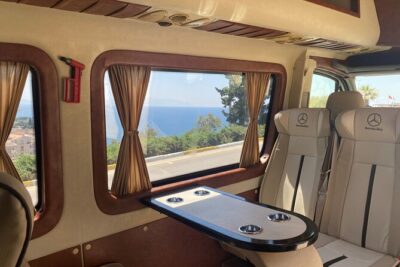
NO HIDDEN FEES : Private Ephesus – Miletus – Didyma
Read our review →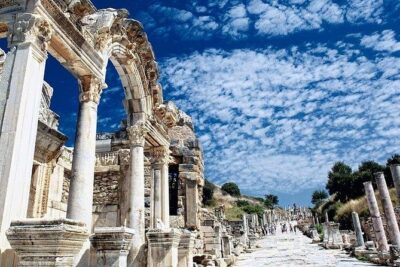
Kusadasi Shore Excursion: Private Full-Day Tour to Ephesus, Didyma and Miletus
Read our review →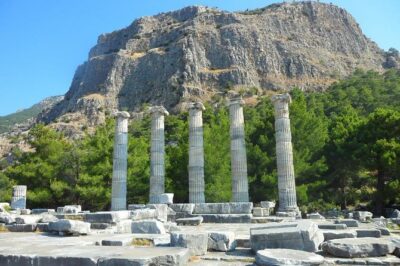
Priene, Miletus, and Didyma Day Tour from Kusadasi
Read our review →
Private Full-Day Ephesus Tour with Miletus and Didyma for Cruise Guests
Read our review →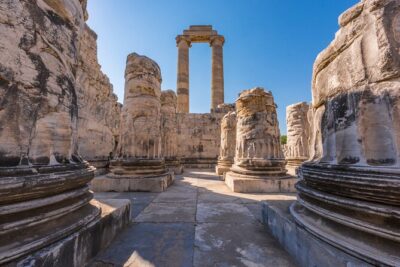
Priene Miletos Didyma (PMD) Tour From Kusadasi Port / Hotels
Read our review →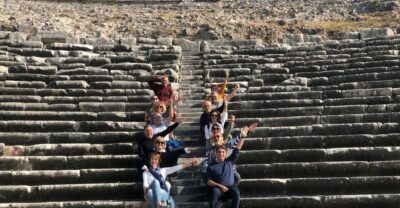
Private Ephesus Miletus Dydima Tour from Port Kusadasi
Read our review →Browse the lists this tour appears in